
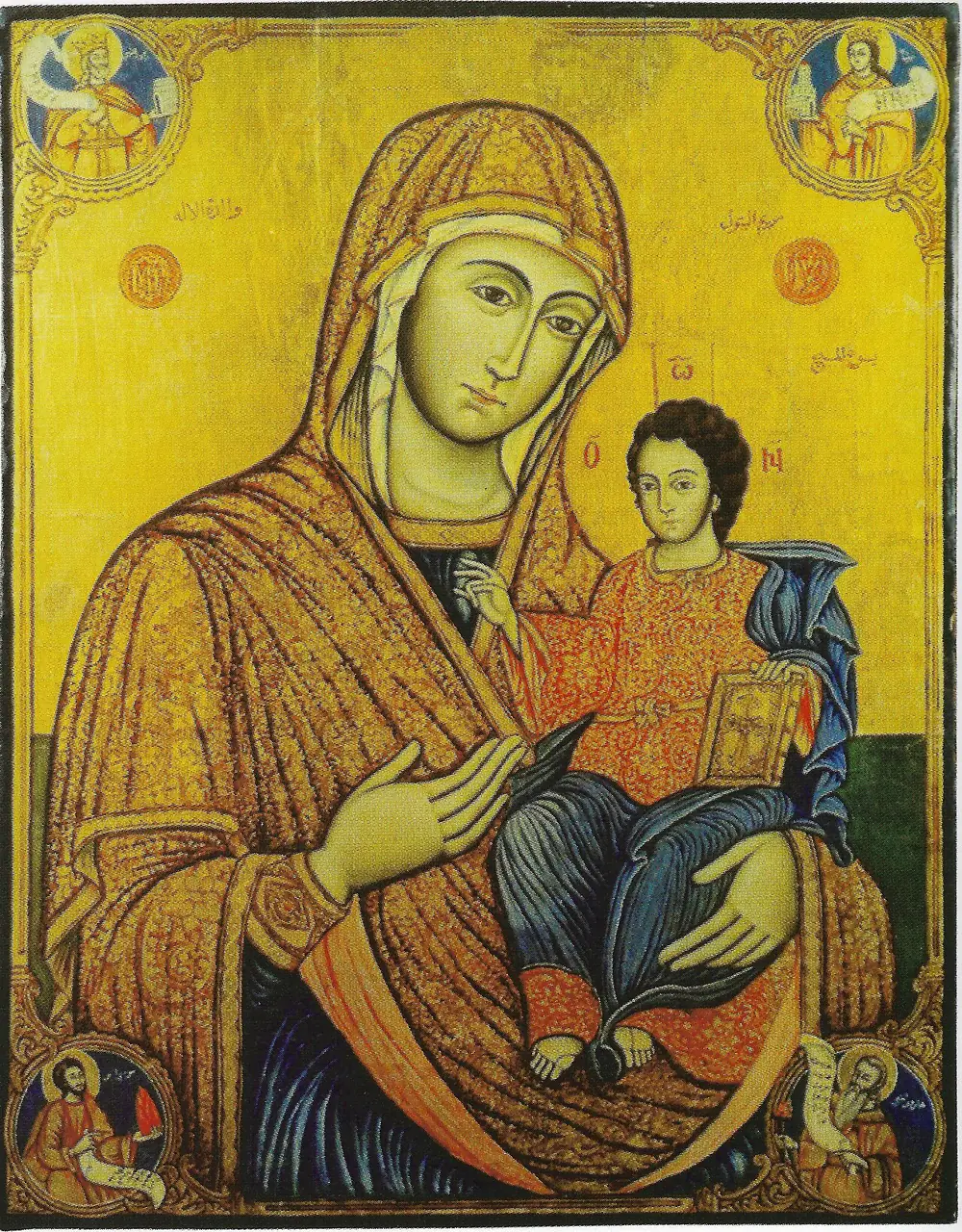
The Betrothal of the Most Holy Theotokos
Rejoice, O Bride unwedded
Virginal purity — pleasing to Jesus Christ and honoured by Christians — was not counted a virtue among the Jews. Every maiden brought up at the temple had to be given in marriage when she reached a certain age. All the more was every young girl of the royal line of David bound to marry, since the King-Messiah was awaited from the house of the prophet David.
When the Virgin Mary had reached fourteen years and eleven days, the high priest told her that by a rule which had the force of law she must leave the temple, be married and settle in a home of her own. The All-holy Virgin answered humbly but firmly that from her birth she had been offered to God by her parents, and that afterwards, when she came of age, she had herself vowed to keep her virginity for ever, and did not wish to break this vow.
So firm a resolve greatly amazed the high priest, and the priests too were troubled. They could not set the law at naught, nor could they compel the Virgin to break her vow. All gathered in the temple and prayed fervently that God would reveal His will to them. The high priest, clothed in the sacred vestments, went in behind the veil and was counted worthy to learn the will of God. An angel of the Lord appeared to him and said: “Zacharias, gather the unmarried men of the tribe of Judah, of the house of David, and bid each of them bring you his rod; on whomsoever the Lord sends down a sign, to him give the Virgin, that he may guard her virginity.” Then heralds were sent out through the country round about Judea, and at their summons a great multitude of men gathered. The high priest chose twelve devout and aged men of the house of David, took a rod from each, went into the temple and began to pray that the Lord Himself would choose the man worthy to be betrothed to the Virgin. The rods were left in the temple all night. When on the next day the high priest, with the servants of the church and the twelve old men, went into the temple again, they saw that Joseph’s rod had blossomed; and when the high priest gave everyone back his rod and handed the last to Joseph, they saw a dove fly down from heaven and alight upon the rod. Joseph, who was a kinsman of the Virgin Mary, was a righteous man and awaited the coming of the Messiah with longing. He had reached a great age — he was by then over eighty years old; for a long time, since the death of his wife Salome, he had lived as a widower, and he had six grown children: four sons — James, Joses, Simeon and Jude — and two daughters, Mary and Salome (some church historians call them Tamar and Esther. The children of Joseph the Betrothed are spoken of as the brothers and sisters of Jesus Christ, and Salome’s sons, James and John the sons of Zebedee, as His nephews). To the high priest’s words that he must take the divine Virgin into his keeping, Joseph answered that he was already old and had grown children, while Mary was so young that he himself would become a laughing-stock among the Jews. At this the high priest reminded him of the fate of Dathan, Abiram and Korah, when for their resistance to the Lord the earth opened and swallowed them up: “Fear lest the same befall your house too.”
Joseph submitted to the will of God, and the Virgin Mary was betrothed to him — that is, she was given to him not for marriage but for the keeping of her virginity, so that the eternal mystery should be hidden from the eyes of men. Tradition holds an indication that the Virgin Mary had a revelation in which she was told not to be afraid to go to Joseph, who under the name of husband would be the guardian of her virginity. After the betrothal Joseph went with Mary to his own town, Nazareth.
Joseph came of a royal house and was a descendant of David, but he had not been able to keep up the glory and wealth of his forefathers as befitted them. He worked with his own hands. The divine Mary, brought up in the temple and skilled in handiwork, did not hesitate to follow her betrothed, who brought her into a poor household. He was a carpenter and lived by the sweat of his brow, but he was marked by nobility and firmness of character. The humble carpenter was the finest son of his people, and Mary saw that in him God had given her a father, a guardian and protector of her virginal life.



