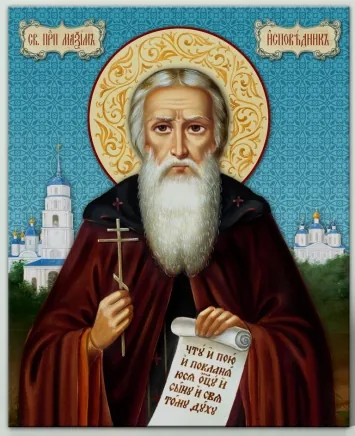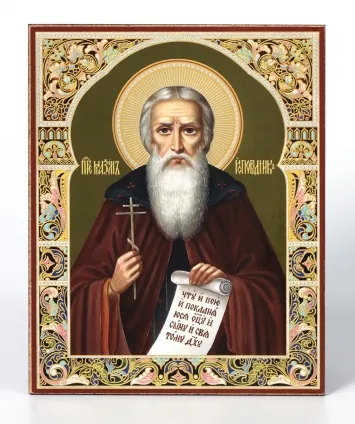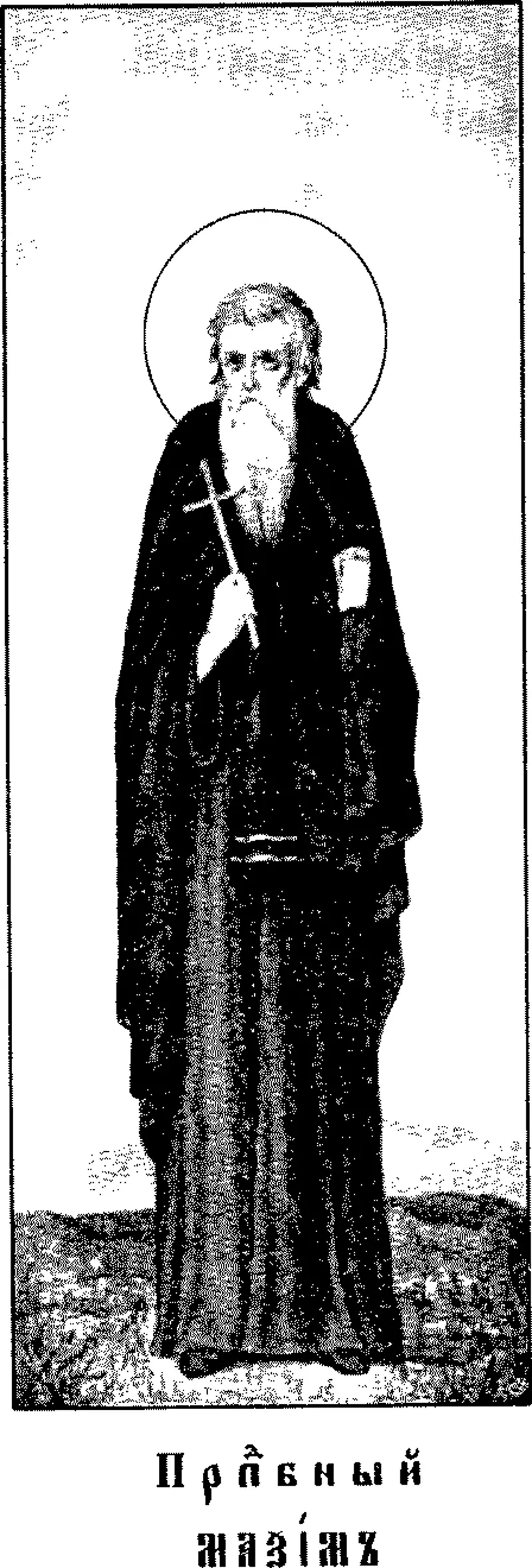
Venerable Maximus the Confessor (+662)
The Venerable Maximus the Confessor was born in 580 in Constantinople, into a family of pious Christians. In his youth he received a many-sided education: he studied philosophy, grammar and rhetoric, became acquainted with the ancient authors, and mastered theological dialectic perfectly. Having entered state service, Maximus, thanks to his learning and conscientiousness, became first secretary to the Emperor Heraclius (611–641); but life at court weighed on him, and so he went to the monastery of Chrysopolis (on the opposite shore of the Bosphorus) and was tonsured a monk. By his devout labours the saint won the sincere love of the brotherhood and soon became superior of the monastery, though even in this rank, because of his wonderful humility, he remained, in his own words, “a simple monk”. In 633, at the request of a theologian, later Patriarch of Jerusalem, Sophronius (commemorated 11 March), Maximus left the monastery and set out for Alexandria.
At this time Saint Sophronius became famous for his irreconcilable struggle against the heresy of the Monothelites. After the Fourth Ecumenical Council (451) had condemned Monophysitism, which acknowledged only one (divine) nature in Jesus Christ, the Monothelites introduced the teaching of one divine will and one (divine) operation, which led to acknowledging the rejected Monophysite false teaching. Monothelitism gained many followers in Armenia, Syria and Egypt. Orthodoxy’s struggle with the heretical teachings was made harder by the fact that the three patriarchal thrones of the East had fallen into Monophysite hands: the Church of Constantinople was governed by Sergius, that of Antioch by Athanasius, and that of Alexandria by Cyrus. On his way from Constantinople to Alexandria the Venerable Maximus had to pass through Crete. It was here that his work as a preacher began. The venerable father spent six years in and around Alexandria. Maximus the Confessor ardently defended Orthodoxy, and his preaching had great success among people of various ranks and classes.
In 638 Patriarch Sergius died, and in 641 the Emperor Heraclius. The wrathful and cruel Constans II (642–648), a zealous supporter of the Monothelites, came to reign in the country. The Venerable Maximus went to Carthage and preached in the city and its surroundings for five more years. When Pyrrhus, Patriarch Sergius’s successor, who had fled from Constantinople because of court intrigues, came there, a public disputation took place between him and Maximus, at which the heretic acknowledged his error and expressed the wish to hand Pope Theodore a written renunciation of his views. The Venerable Maximus set out with Pyrrhus for Rome, where the pope accepted the former patriarch’s confession and restored him to his former rank. In 647 Maximus returned to Africa. In October 649 a council was held, attended by 150 western bishops and 37 representatives of the Orthodox East, among them Maximus the Confessor. The council condemned Monothelitism and anathematised its defenders, the Patriarchs of Constantinople Sergius, Paul and Pyrrhus.
When Constans II learned of the council’s decree, he ordered Pope Martin and the Venerable Maximus to be seized. The Venerable Maximus was accused of treason against his homeland and thrown into prison. In 656 he was exiled to Thrace, and then brought back again to Constantinople. The venerable father was terribly tortured together with his two disciples: the tongues of all three were cut out, their right hands were cut off, and they were exiled to western Georgia. Here a miracle took place: the martyrs regained the ability to speak and write. Saint Maximus foretold his end and reposed in peace on 13 August 662. At his grave three lamps used to light up by night, and many healings took place. Saint Maximus is buried in the town of Tsageri.