
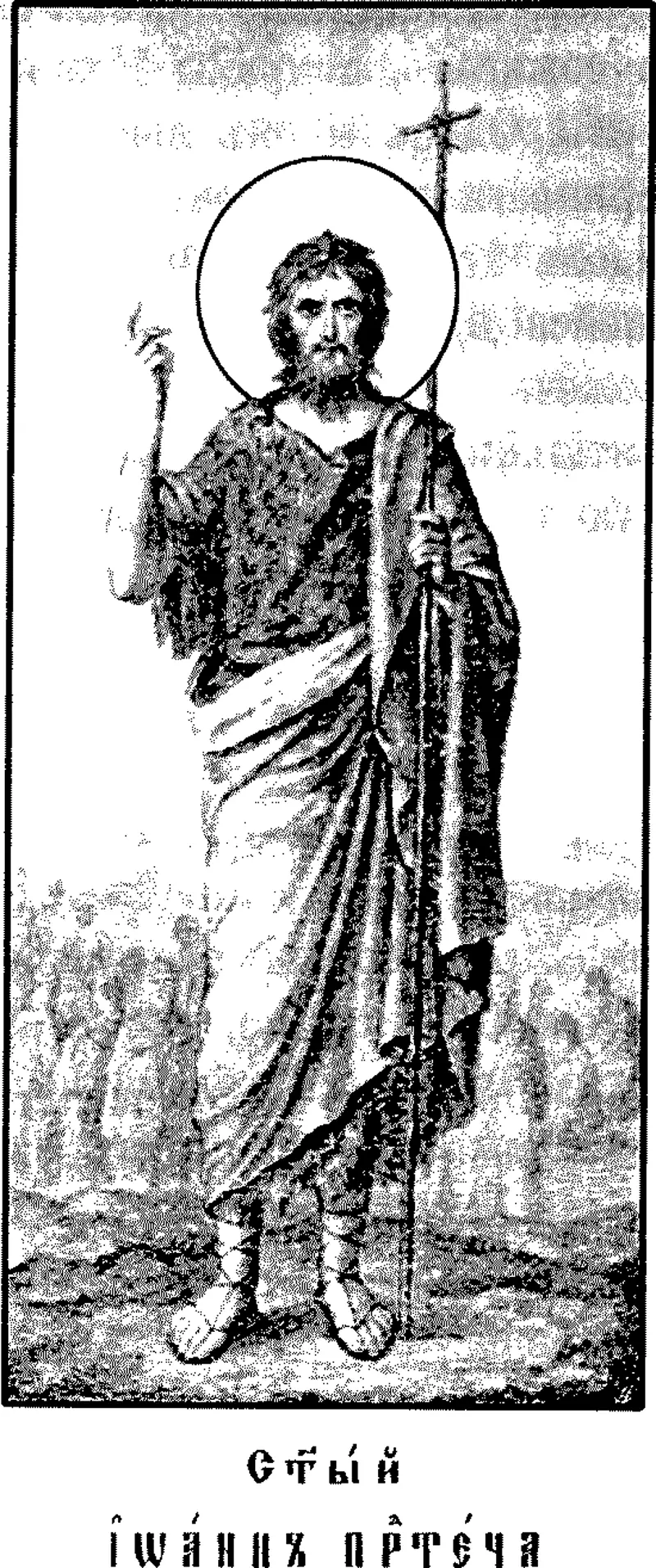
The First (IV) and Second (452) Finding of the Precious Head of the Holy and Glorious Forerunner and Baptist John
After the beheading of Saint John the Baptist (commemorated 29 August), his disciples buried his body with honour in the Samaritan city of Sebaste, while the lawless Herodias buried the holy head in a dishonourable place. The pious Joanna, wife of Herod’s steward Chuza (she is mentioned by Luke the Evangelist, Luke 8:3), secretly placed John’s head in a precious vessel and committed it to the earth on the Mount of Olives, on one of Herod’s estates. Many years later this estate passed into the possession of a pious nobleman, Innocent, who decided to build a church there. While the foundations of the church were being dug, the vessel with the head of the Forerunner of the Lord was discovered. The greatness of the holy relic that had been found was revealed by the miracles worked at it. This was the first finding of the head of John the Baptist. Innocent kept it with reverence, but before his death, fearing that the holy relic might fall into the hands of the lawless, he buried it in the same place from which he had taken it. Afterwards the place gradually became deserted, and the church fell into ruin.
In the reign of the Emperor Constantine the Great, Equal to the Apostles (+337; commemorated 21 May), in the time when Christianity flourished, the Forerunner of the Lord twice appeared to two monks who had come to venerate the holy places of Jerusalem, and told them where his precious head lay. The monks dug up the holy relic, put it in a sack of camel’s hair and set off for home. On the way they met an unknown potter, and gave him the precious burden to carry. The potter did not know what holy thing he was carrying, but the Baptist himself appeared to him and commanded him to flee from the careless and slothful monks with what he held in his hands. The God-loving craftsman secretly slipped away from his companions. Afterwards he kept the holy head with honour, and before his death handed it on to his sister. From that time the holy relic passed by inheritance to God-fearing Christians, until its owner became a heretic hierarch, Eustathius. He healed the sick by the power of the holy relic of the precious head, and then attributed the miracles worked to the grace of the heresy and led inexperienced souls astray. When Eustathius’s evil deeds came to light, he was forced to flee, and he hid the holy relic in a cave near Emesa, hoping to return and take possession of it again. God did not allow this: pious monks settled in the cave, and afterwards a monastery was founded there. In 452 John the Baptist revealed to Marcellus, archimandrite of the monastery, where his holy head lay. This event is celebrated as the second finding of the holy relic. The precious head of the Baptist was translated first to Emesa, and then to Constantinople.



