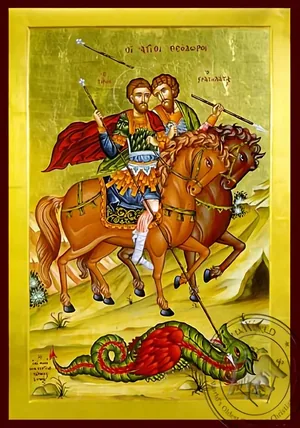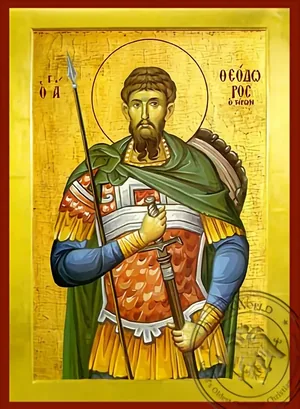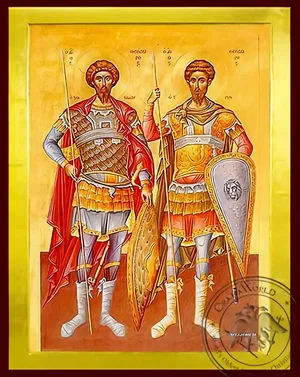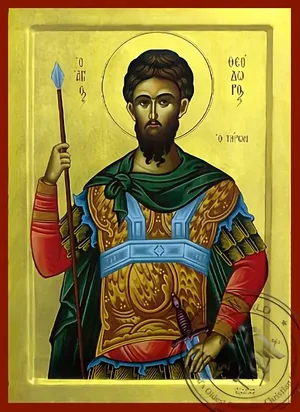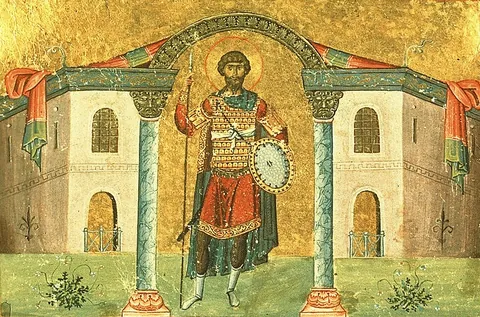
Great Martyr Theodore the Recruit (+c. 306)
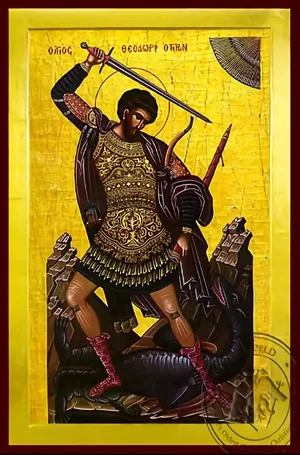
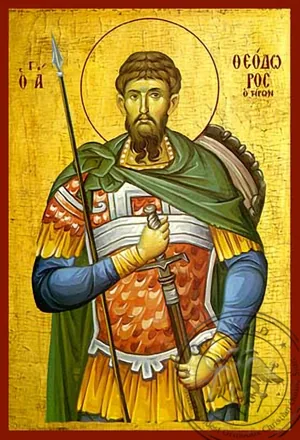
The holy Martyr Theodore the Recruit served in a regiment stationed at Amasea in Pontus. He was still a new recruit (“tiro” means recruit in Latin) when the lawless kings Maximian (305–311) and Maximinus (305–313) issued a decree that every Christian who refused to worship the idols was to be handed over to the tribunal. Theodore too was ordered to offer sacrifice to the false gods, which he firmly refused, and he publicly confessed Christ. The commander of the regiment, Brincas, gave the saint a few days to think it over, but he had nothing to decide. Strengthened by fervent prayers, the saint burned down the temple of Cybele, “the mother of the gods”, which was now an open challenge. The enraged judge ordered Theodore to be thrown into prison and killed by hunger and thirst.
To the martyr, abandoned by the lovers of this world, the Saviour appeared and said to him: “Take courage, Theodore, I am with you; do not take earthly food and drink, for eternal life in heaven is prepared for you.” Comforted, Theodore rejoiced and began to sing psalms. A choir of angels joined his singing. The guards, hearing the wonderfully sweet voices, looked in at the window and saw a multitude of young men in white garments surrounding the martyr. When they opened the door, there was no one in the cell but Theodore.
The pagans soon got over their terror and handed the blessed confessor over to torture: first they tied him to a tree and tore him with forks, and then they lit a huge fire and brought him to it. With his bones laid bare, Theodore went into the fire, made the sign of the cross, and, strengthened by the grace of the Holy Spirit, committed his soul to the Lord in prayer. This happened on 17 February 306. A pious woman, Eusebia, wrapped the saint’s incorrupt body in clean linen and buried it in her house. Afterwards the martyr’s holy relics were translated to Constantinople, to the church dedicated to him, while his head rests in the Italian city of Gaeta.
Fifty years after the saint’s repose the lawless king Julian the Apostate (361–363) decided to defile the Christians secretly. He summoned the governor of Constantinople and ordered him, every day of the first week of Great Lent, to sprinkle the food sold in the market with the blood of idol-sacrifices. Saint Theodore the Recruit appeared to Archbishop Eudoxius and commanded him to tell the Orthodox not to buy food in the market, but to eat only kolyva, wheat boiled with honey.
To commemorate this event the Church every year celebrates the memory of Saint Theodore on the Saturday of the first week of Great Lent, and blesses kolyva for the faithful in his honour.