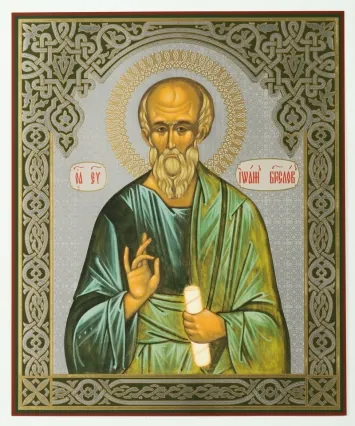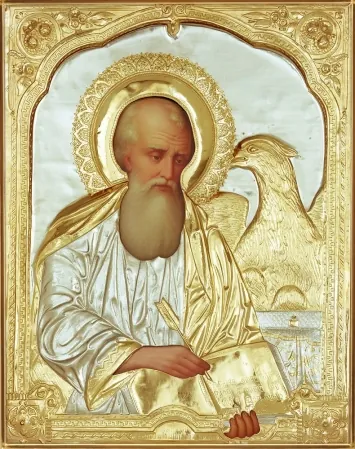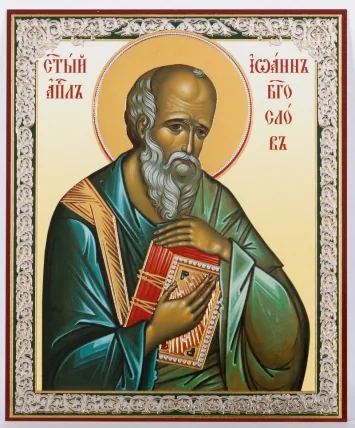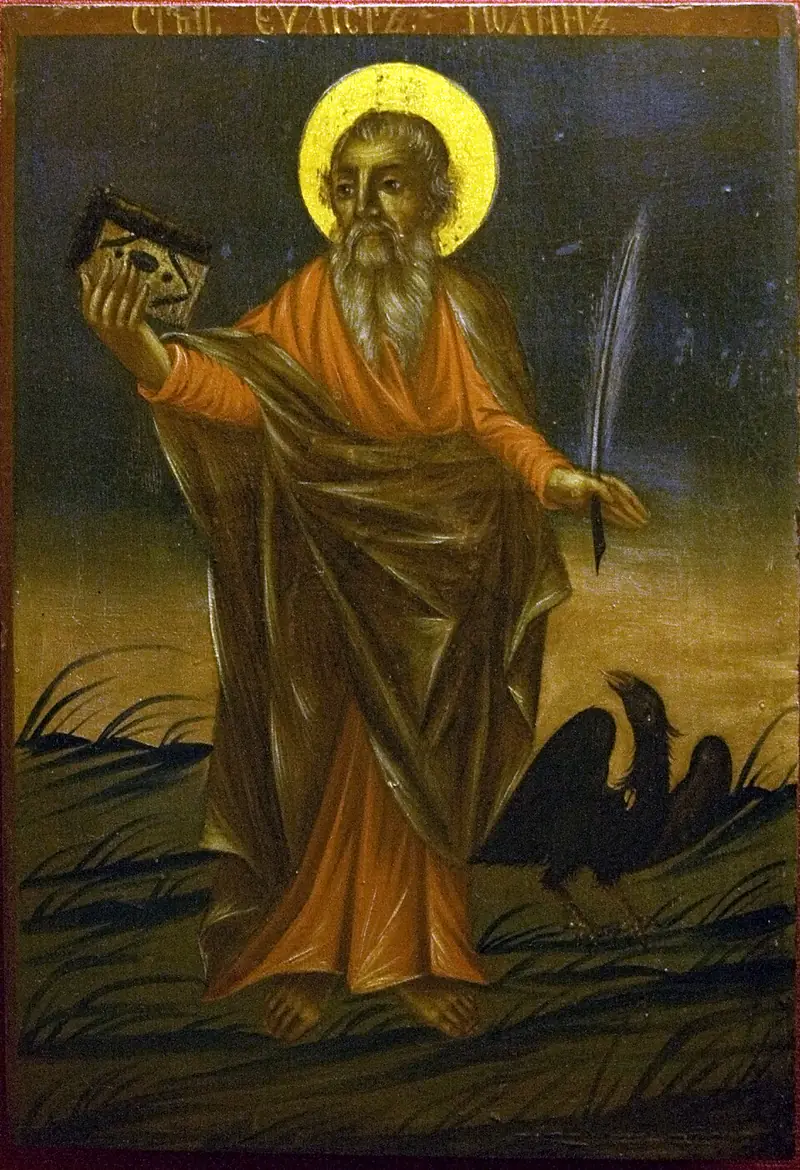
The Holy, Glorious and All-praised Apostle and Evangelist John the Theologian (98–117)
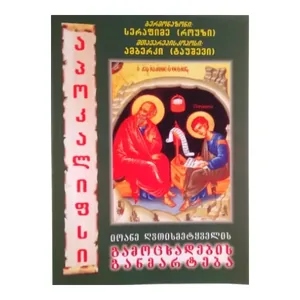
The holy, glorious and all-praised Apostle and Evangelist John the Theologian (98–117), son of Zebedee, a Galilean fisherman, and brother of the holy Apostle James, was eagerly awaiting the appearing of the Messiah. It is possible that John was a disciple of John the Baptist, and that it was he who afterwards brought him to Jesus Christ. The Saviour called John, and together with James and Peter he became one of the most faithful disciples of Jesus Christ. Jesus Christ loved him especially, and for his devoted service and spiritual strength called him a “son of thunder”. After he drew near to the Saviour, John’s moral world was raised still higher, and his soul was filled with a devoted, supreme love for Jesus Christ. After the descent of the Holy Spirit John zealously preached the Gospel in Jerusalem together with Peter; in his house, which stood on the height of Zion, he cared for the All-holy Mary, the Mother of the Saviour, whom Christ, nailed to the cross, had entrusted to him and who lived with him until her Dormition. He laboured together with Peter in Samaria too, then returned to Jerusalem; from Jerusalem he went on to Asia Minor and chose the city of Ephesus as the centre of his apostolic work. John sought to strengthen Christianity in the places where it had already taken root, so that Christianity, founded on firm ground, might then spread elsewhere too. In the reign of Domitian John was exiled to Patmos, an island in the Mediterranean, which he enlightened. To this day there is a monastery on the island, built in the name of Saint John the Theologian, a prisoner for the teaching of Christ.
On the island of Patmos the Lord sent the holy Apostle John a whole series of mysterious revelations, in which were shown the battle of the Lamb with the serpent and the Lamb’s victory. The Lord commanded him to write a book about these visions and to send it to the seven churches of Asia for the comfort and guidance of Christians. The Apocalypse — the Revelation — discloses to us the future and the end of the Church and of the world.
After the emperor Trajan ascended the Roman throne, the prisoner of Patmos received his freedom and returned to Ephesus, where he went on labouring to guard the purity of the Christian teaching.
At the earnest request of the faithful he wrote down everything he had preached by word of mouth, and so completed the three Gospels already known with a fourth.
According to the apostle’s teaching, where there is not complete devotion, there is nothing. Saint John writes that the believer must give himself wholly to the Lord and be faithful to Him. Hence he regards sin not as weakness or as the imperfection of human nature, but as evil, a deed done against the good. In the holy apostle’s view a man belongs either to Christ or to the devil; there is no middle, undetermined state (1 John 2:22; 4:3); therefore he served God with perfect love and steadfastness. The more a man loves Christ, the more he hates the antichrist; the more he strives toward the truth, the further he departs from falsehood, for light drives out darkness (John 8:12; 12:35–36).
Saint John the Theologian lived more than a hundred years. When the apostle sensed that the end of his earthly life was drawing near, he went out of Ephesus with seven disciples, withdrew to a high rock near the city and prayed. Then he bade everyone a loving farewell, had a grave dug in the shape of a cross, lay down in it and asked them to cover him with earth.
The disciples kissed their beloved teacher with tears, but did not dare to disobey, and little by little filled the grave with earth. When the people of Ephesus learned of this, they came to the apostle’s grave and dug it up, but found nothing in it.
According to tradition, every year on the 8th (21st) of May a fine dust rose from the grave of Saint John the Theologian, which the faithful used for the healing of various ailments of body and soul.
Of Christ’s apostles John lived the longest, and he was the only one among them who did not die a martyr’s death but reposed peacefully in Ephesus on the 26th of September, around AD 110.