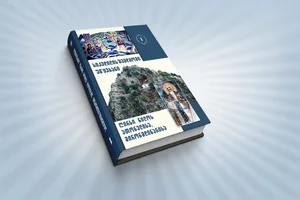
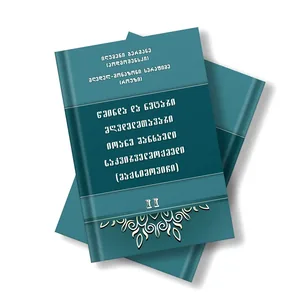
The publishing house 'Alilo' has printed the book by Ioannis Panagopoulos, "The Acts of the Apostles — Theological Commentaries."
The Georgian reader is already familiar with some editions of commentaries on the Acts of the Apostles in the Georgian language; now this most important book of the New Testament will be seen through yet another, fresh lens of interpretation.
After consultation with faculty of the School of Theology at the University of Athens, the study of the late professor of the University of Athens, Ioannis Panagopoulos (1984 edition), was chosen for the Georgian reader.
I. Panagopoulos received his theological education at Halki and chose as his field of research the interpretation of the New Testament and the history of the early Church. He taught the New Testament at the University of Athens from 1979 until his death. He actively collaborated with foreign-language publications and contributed to introducing the heritage of the Orthodox fathers to the West.
The book "Theological Commentaries on the Acts of the Apostles" covers the section 1–8:3:
from Pentecost to the stoning of the protomartyr Stephen and the first persecution of the early Church — a period of special importance for understanding the origins of Christianity and its ideals. These very events formed the backbone and, in a sense, the program for all the rest of history.
It is worth noting that the interested reader may also turn to additional sources cited by the author within the work itself. The patristic commentaries are drawn from the series published by Cramer (Catenae) and supplemented either with the relevant commentaries of the fathers or with their other works. Where rabbinic tradition is mentioned without a note, the reader is advised to consult the well-known commentaries on the New Testament by Strack–Billerbeck on the Talmud and Midrash.
The work especially brings out the figure of the Evangelist Luke — as historian and writer — and history itself as the arena and canvas upon which God imprints His providence.
The book is intended for a broad readership; it will also be useful to students of theological seminaries and academies in their study of New Testament history.

 Enlarge