
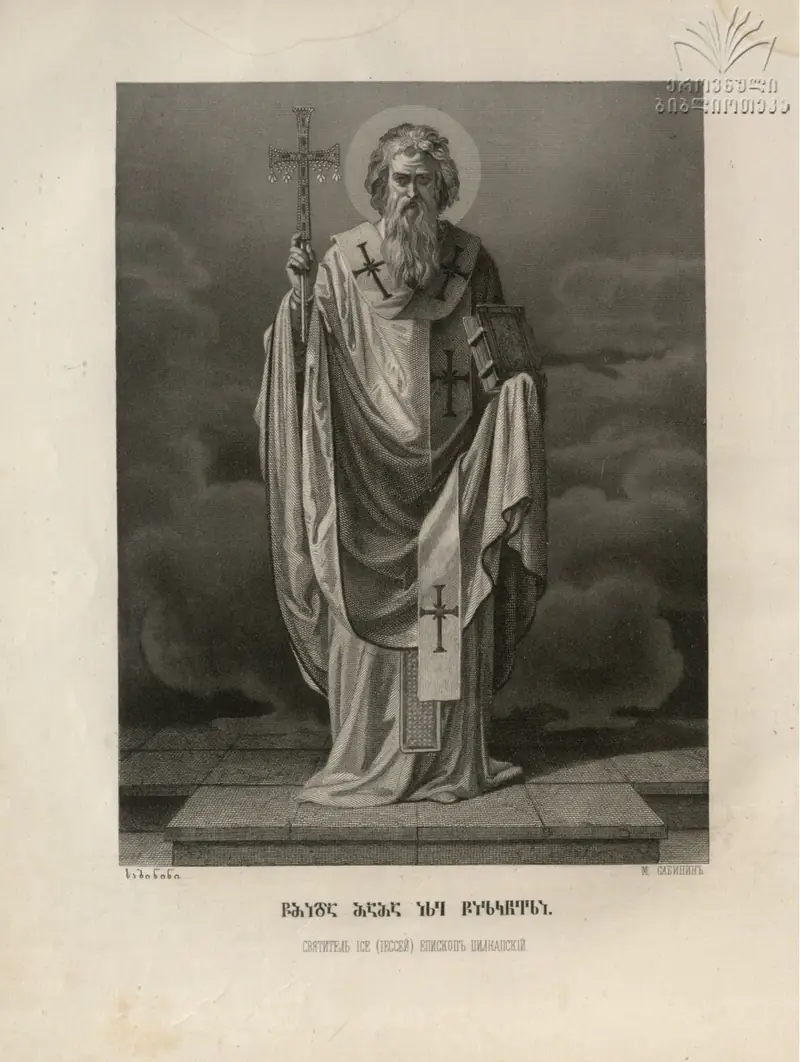
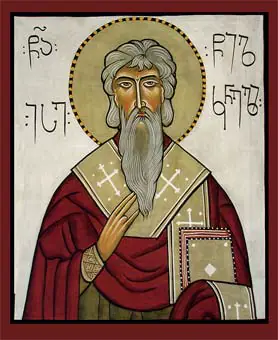
Saint Ise of Tsilkani, One of the Thirteen Syrian Fathers (VI)
In the sixth century the spiritual life of Georgia was made radiant by the fathers who came from Assyria, Saint John of Zedazeni and his disciples.
The coming of the saints was made known from on high to Eulavios, Catholicos of Kartli. Joy dwelt among the faithful people, for the Lord had looked once more upon the land that is the lot of the Mother of God, and had sent it His chosen children as teachers and enlighteners.
The venerable fathers founded many churches and monasteries in Georgia and laid the foundation of the monastic life.
With the blessing of Catholicos Eulavios and of John of Zedazeni, the Venerable Ise laboured at Tsilkani.
After the death of the bishop of Tsilkani, Catholicos Eulavios consecrated as hierarch, against his will, Saint Ise, renowned for his purity and come to the fullness of the virtues. Ise did not want to receive the honour of a bishop, and with tears and weeping begged to be let go, but he could not stand against the blessing of the catholicos and of John of Zedazeni.
The holy hierarch’s vigils and fasting knew no measure. By almsgiving and love of mankind, by hospitality to strangers and help to the poor, he won a name far and wide. The Venerable Ise travelled through the whole diocese and preached the Gospel. The good shepherd and wise steward went from city to city and from township to township and worked miracles: he healed the sick, cleansed lepers, cast out demons and loosed sins, and raised the paralysed by the touch of his hand.
The Venerable Ise went especially through the mountain places, pulled down the heathen shrines, shattered the idols and baptised the pagans in the name of the Trinity.
Once the blessed John of Zedazeni called his disciples Ise of Tsilkani and Shio of Mghvime, to test them in virtue and to show the people the power of Christ.
The holy father said to his spiritual children: “I desire that some miracle be wrought through you, that they that see it may glorify God; for the Georgians greatly long to see signs and wonders from you, that they may believe the more in the faith preached by us.” The venerable fathers received the blessing in obedience.
Saint John told the deacon Elijah to bring him a cup, and then handed the cup to Ise to bless, as a bishop and the senior. Ise, on the contrary, asked him for his prayer. “Then the blessed one lifted up that cup and made a prayer, and finished, and let it go. And the cup stood in the air, as upon something firm.”
Then Saint John said to the Venerable Shio: “It is meet to give thanks and to offer incense.” Saint Shio went to the fire, took up live coals, laid them on the palm of his hand and put incense on them. He censed everyone, and took no harm at all.
Those who saw this miracle glorified God. Now Saint John turned to the Venerable Ise: “Lord father, we desire to receive a blessing from thee, that we may have it for a remembrance of thee.” The obedient disciple dared not disobey his teacher, and went down to the bank of the river Ksani. The holy fathers and a great crowd of people followed him. The Venerable Ise made the sign of the cross over the river, then “smote the waters with his staff in the name of our Lord Jesus Christ”. And he said: “River, in the name of our Lord Jesus Christ I command thee: go after me and follow me, as long as I go.” Suddenly the river changed its bed and followed Ise’s staff. Wherever Saint Ise went, the water went after him, until it reached the cathedral of Tsilkani. The uphill slope did not hinder it.
The people of Mtskheta and of the villages round about who saw this miracle glorified the name of Christ, who had sent down such grace on His chosen ones.
The wonderworking father was told beforehand by the Lord the day of his departure from the body. He gathered his disciples and the servants of the church, gave them his last instructions, blessed them, received Communion, and committed his soul to the Lord: “Lord, into Thy hands I commend my spirit”: these were the saint’s last words.
The remains of the Venerable Ise of Tsilkani were buried there, in the church of the Mother of God at Tsilkani.



