
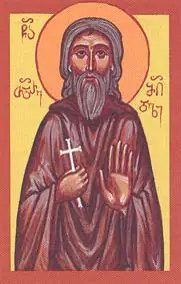
Holy Martyr Theodore the Priest (of Kvelta) (+1609)
The holy martyr Theodore the priest (of Kvelta) lived at the beginning of the seventeenth century. This was the time when Iran and the Ottoman Empire were locked in a struggle to the death over the city of Baghdad. At the beginning of 1609 the Ottomans prevailed over Persia, took Baghdad from it, then seized Samtskhe-Saatabago, and in June of the same year invaded Georgia from Akhaltsikhe.
At that time the young king Saint Luarsab II (commemorated 21 June) was reigning in Georgia. He was staying with a small suite at the fortress of Tskhireti, his summer residence. The Ottomans, who knew where the king was staying, resolved to break into Inner Kartli by the shortest road, attack the fortress of Tskhireti, seize Luarsab, and in this way subdue all Georgia.
The Ottomans swiftly crossed Trialeti, slaughtered the Georgians guarding the roads into Kartli, and suddenly appeared before Manglisi. The church of the Theotokos at Manglisi miraculously escaped plunder. The chronicler writes: “So thick a cloud and mist covered it that, although so great a multitude of soldiers passed right before it, they did not see the church together with the village.” Saint Luarsab knew nothing of the attack, and the enemy was only some five hours’ march from Tskhireti. Several roads led from Manglisi to the king’s summer residence. The Ottomans could not decide which road to take.
Near Manglisi, in the village of Kvelta, the Tatars seized a Georgian priest, “by name Theodore, honourable and God-fearing and faithful to his king”. The priest, it is said, was locking the church and had not managed to flee into the forest with the others, because he had been hiding the church’s treasures from the enemy’s hands. The Ottomans demanded that Father Theodore act as their guide; otherwise a death by torture awaited him. “But he, the blessed priest, chose death rather than betray the king and give up Georgia.” The priest led the army astray and took it away from Tskhireti. The Ottoman army, marching west, thought that it would soon turn north and fall upon the king unawares. After long marching over trackless ground, when “on hard and narrow and rocky roads and in other places many horses and men fell down the rocks and precipices and perished”, the Ottomans understood that they had been deceived. “When they saw themselves so lost and hemmed in, the men of rank among them seized that priest and cut off his head.”
Theodore’s self-sacrifice bore fruit. The holy King Luarsab had time to fortify himself in the fortress, and then the Georgian host wiped out the raiders.



