
Venerable Marina and Her Father Eugene (VI)
The Venerable Mary-Marina and her father, the Venerable Eugene, lived at the beginning of the fourth century in Bithynia (a region in the north-west of Asia Minor). After being widowed the Venerable Eugene decided to go to a monastery, but his daughter did not wish to be parted from her father; she put on men’s clothing and went with her parent. They settled together in a monastery near Alexandria, where Mary was tonsured a monk with the name Marina.
“Brother” Marina advanced greatly in the virtues, and was distinguished by humility and obedience. Some years later Mary’s father died, after which she intensified her labours still more. The Lord rewarded His God-pleaser with the gift of casting out unclean spirits.
Once Marina was sent with other brothers to work in the monastery garden. On the way they spent a night at an inn. The innkeeper’s daughter, who had fallen into sin with one of the lodgers, slandered “the monk Marina” and declared him her seducer. Her father complained to the hegumen of the monastery, and the superior drove “the sinful brother” out of the monastery. The venerable mother did not let slip a single word in her own defence and began to live by the monastery wall. When the woman who had conceived bore a son, her father brought his grandson to Marina, threw him down without a word and turned back. The saint adopted the child and took on his upbringing.
Three years later the brothers asked the hegumen to take the disgraced “brother” back into the monastery. The superior agreed, but very unwillingly. He charged Marina, on her return, with the heaviest tasks of obedience, and “the monk” carried them out with great diligence, bringing up the child at the same time.
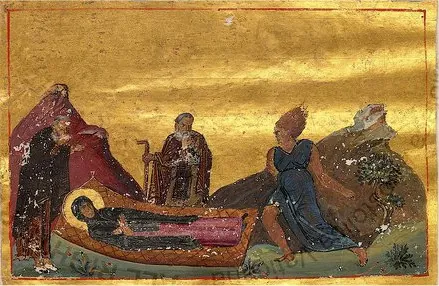
Three years later the saint committed her soul to the Lord in peace. The brothers who went into the cell found the departed monk and the little boy sobbing by the body. When they began to prepare the blessed woman’s body for burial, her secret was revealed. In tears the hegumen of the monastery asked forgiveness of the departed soul, and the innkeeper followed his example. The body of the Venerable Mary was buried with honour in the monastery. Her slanderer, who had become possessed, publicly confessed her sin at the coffin and was healed.
The holy relics of the Venerable Mary-Marina were translated to Constantinople, and from there were taken to Venice in 1230.



