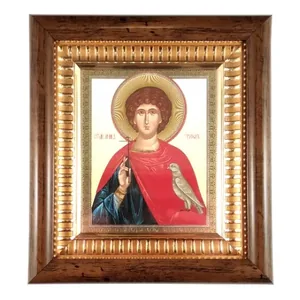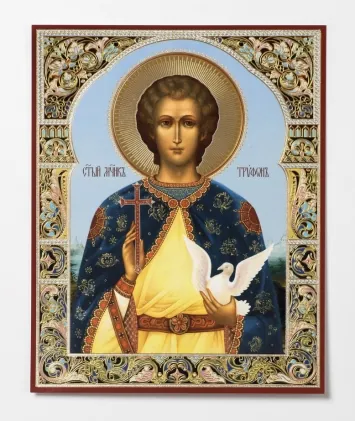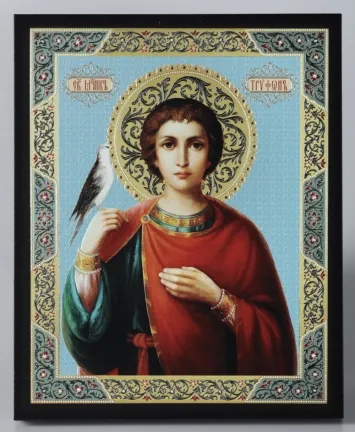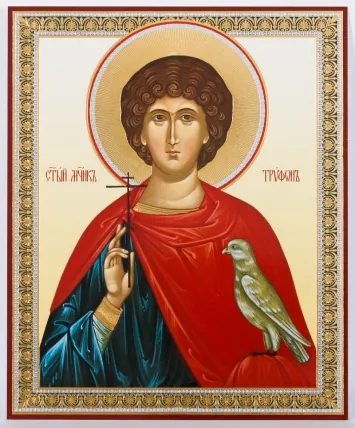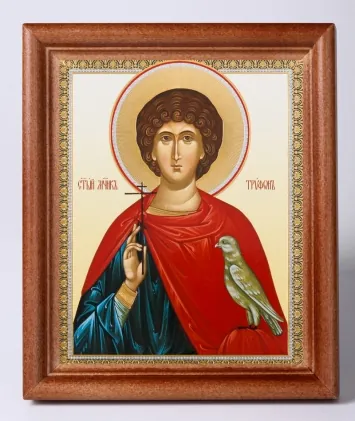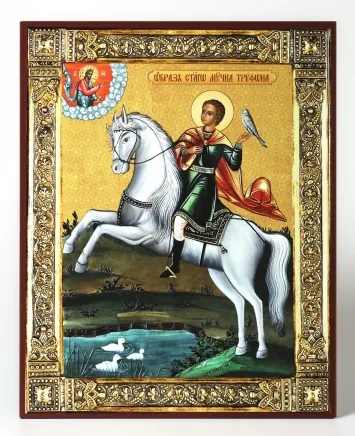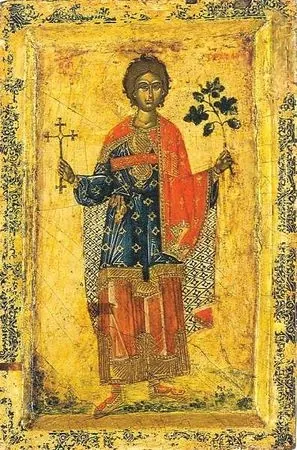
Holy Martyr Tryphon (+250)
The holy Martyr Tryphon was born in the village of Kampsada near the Phrygian city of Apamea. While he was still a child the Lord granted him the gift of casting out demons and healing various illnesses. Once harmful insects swarmed over the wheat fields of Kampsada and threatened to destroy the whole harvest. Tryphon drove them out by the power of prayer and saved his fellow villagers from famine. At that time Gordian was reigning in Rome, and he had a possessed daughter. By God’s will the evil spirit that had nested in the maiden cried out: “No one can drive me out but Tryphon.” When the king’s servants had found the boy and were returning with him to Rome, the demon cried out: “I cannot stay here, Tryphon is coming!” and left the girl. The overjoyed Gordian asked the saint to show him the demon visibly. Tryphon intensified his prayer, and on the seventh day, filled with the grace of the Holy Spirit, he commanded the demon: “In the name of my Lord Jesus Christ I command you: appear visibly to those who are here, show your vile, shameless face, and show us your powerlessness!” That same moment the demon appeared in the form of a black puppy with fiery eyes, dragging its head along the ground. The king and his retinue were horrified. Many believed in Christ and were baptised. The saint helped everyone in need without payment. The only thing he asked in return was faith in Jesus Christ.
When Decius (249–251), a cruel persecutor of the Christians, ascended the throne, it was reported to the eparch Aquilinus that Tryphon was fearlessly preaching Christianity and converting many to his religion. The saint was seized. At his interrogation he courageously confessed the true faith, for which he was cruelly tortured, but the martyr did not once groan. At last he was sentenced to be beheaded. Before the death sentence was carried out, Saint Tryphon besought the Lord to grant special grace to those who would call on his name for help. The lamb of Christ committed his soul to the Lord before the executioner could strike with his raised sword. This happened in Nicaea in 250. The Christians wrapped the saint’s tortured body in linen and wished to bury it in Nicaea, but Tryphon appeared to them and asked to be committed to the earth of his native village, Kampsada. And the God-loving people did so.
Afterwards the holy martyr’s relics were translated to Constantinople, and from there taken to Rome.