
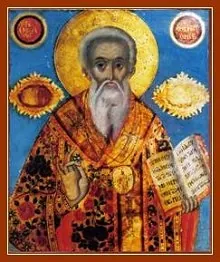
Saint Athanasius, Patriarch of Constantinople (+1311)
Saint Athanasius I, Patriarch of Constantinople (1289–1293; 1303–1311), in the world Alexius, came from the Greek city of Adrianople. While still young, having advanced in the knowledge of Christian wisdom, he left his home, went to Thessalonica, and in one of its monasteries was tonsured a monk with the name Acacius. From there the saint soon moved to the Holy Mountain of Athos and joined the brotherhood of the house of Esphigmenou, where for three years he diligently carried out the duties of refectorian. By unceasing work and by his virtues the blessed one won the goodwill of all.
The humble Acacius, shunning the praise of men, left Athos, venerated the holy places of Jerusalem, and then went to Mount Patra and took up the labour of a hermit. From there the ascetic moved first to the mountain of Auxentius, and then to a monastery on Mount Galesion, where he received the great schema with the name Athanasius, was ordained priest and appointed ecclesiarch. There too the saint was counted worthy of a divine revelation: the voice of the Lord, coming from a crucifix, called him to the ministry of a hierarch.
Ten years later Saint Athanasius moved to Athos again, but various causes forced him to return to Mount Galesion. Even there the blessed one did not find the solitude he longed for: a great many people came to him for counsel and guidance. So a convent grew up at that place. At that time, after the troubles and disorder of the days of Patriarch John Bekkos, the see of Constantinople was vacant. At the proposal of the pious Emperor Andronicus Palaeologus, in 1289 a council of hierarchs and clergy unanimously chose Saint Athanasius as head of the Church.
The blessed father zealously set about carrying out his new duties: he laboured diligently to root out heretical teachings among his flock, and sternly rebuked the vices of the court and of the servants of the Church. All this aroused the displeasure of influential clergy, and in 1293 the saint was forced to leave his see. The blessed one returned again to solitary labour in his monastery. In 1303, by the will of the Lord, the patriarchal staff was handed to Athanasius a second time. For seven more years the Lord’s chosen one bore the heavy cross of chief shepherd, but in 1311, when discontent again showed itself among the clergy, not wishing to become the cause of strife in the Church, he withdrew to his house. At the end of his life Athanasius was once more counted worthy of an appearance of Jesus Christ: the Lord reproached him for not fulfilling his duty as hierarch to the end. The saint repented with tears of his faintheartedness, for which he was granted forgiveness of his sins and the gift of working miracles. The hierarch Athanasius died at the age of a hundred at the beginning of the fourteenth century.



