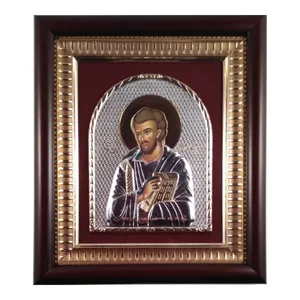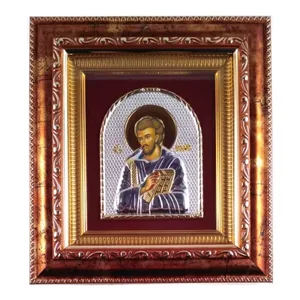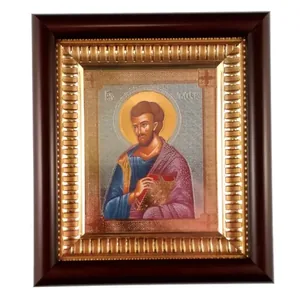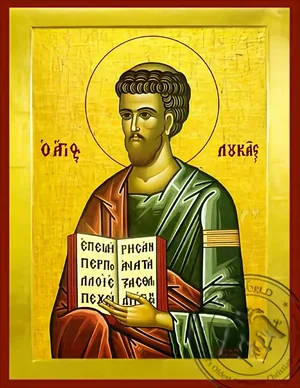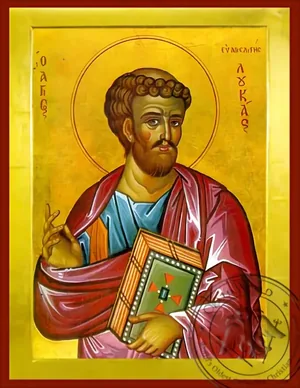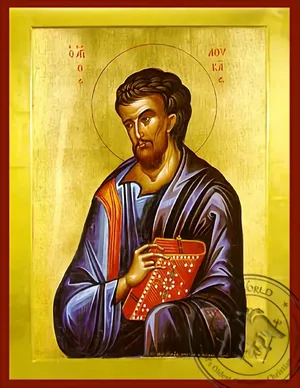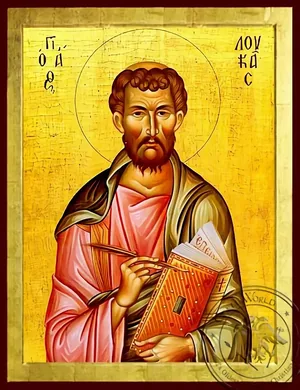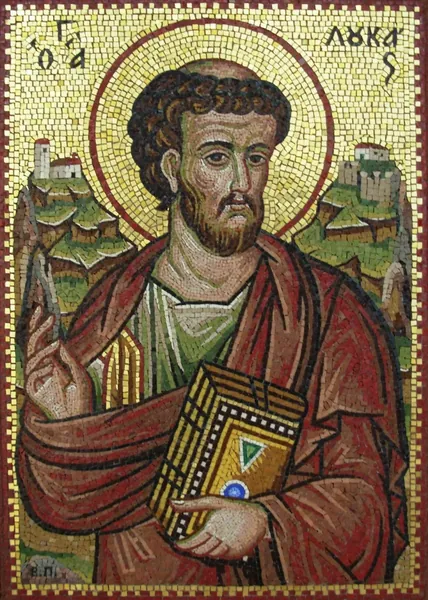
Holy Apostle and Evangelist Luke (I)
The holy Apostle and Evangelist Luke was born in Antioch in Syria. He belonged to educated Greek circles and was a physician by profession. When he heard of Christ, Luke went to Palestine and there received the saving teaching from the Lord Himself. While the Saviour was still living on earth, Saint Luke, as one of the seventy apostles, was sent by the Lord on the first preaching of the Kingdom of Heaven (Luke 10:1–3). After the Resurrection the Lord Jesus Christ appeared to Luke and Cleopas on their way to Emmaus.
Luke went with the holy Apostle Paul on his second missionary journey, after which they were not parted. The Lord’s chosen one stayed at Paul’s side even when all his helpers had left him (2 Tim. 4:10). After the martyr’s death of the chief of the apostles, Saint Luke left Rome and travelled, preaching, through Achaia, Libya, Egypt and the Thebaid; he ended his earthly life with the labour of martyrdom in the city of Thebes.
According to tradition, Saint Luke is also the painter of the first icons of the Mother of God. “May the grace of Him who was born of me be with this icon through my intercession!” the All-holy Virgin said on seeing her holy image. Tradition also links the Atskuri icon of the Mother of God with the name of Luke the Evangelist. The icons of the chief apostles, Peter and Paul, are also the holy apostle’s work.
Luke wrote his Gospel in Rome in 62–63, under the direction of the Apostle Paul. As he himself tells us in its first verses, his aim was to set out more fully and in chronological order everything that was known about Jesus Christ and His teaching, and so to lay a firm historical foundation for Christian hope (Luke 1:1–4).
The Acts of the Apostles is also the work of Luke the Evangelist. It is the continuation of the four Gospels and tells of the labours and struggles of the holy apostles after the Saviour’s Ascension. In the narrative special attention is given, as a very great event in the Church, to the Council of the Apostles (AD 51), which laid the dogmatic foundation for the separation of Christianity from Judaism and became the pledge of its independent spread throughout the world (Acts 15:6–29).