
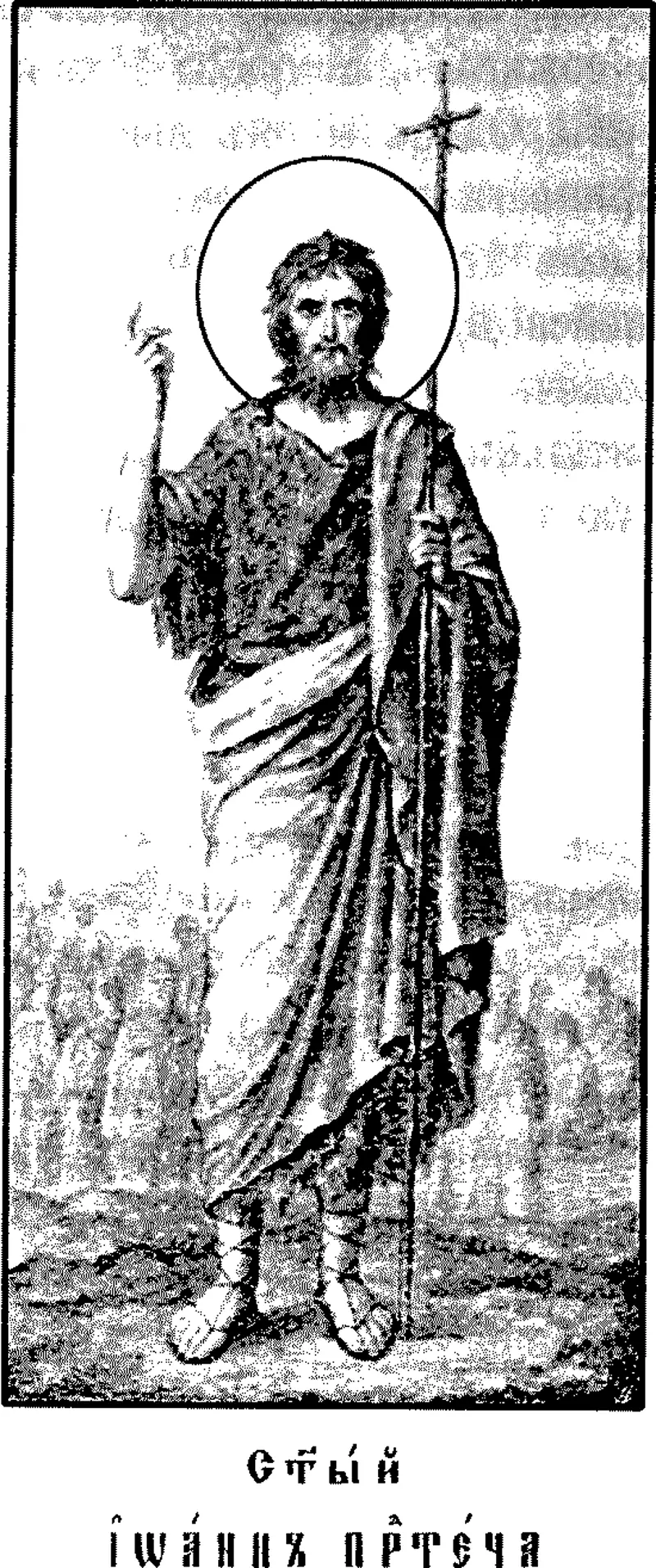
The Conception of the Honourable, Glorious Prophet, Forerunner and Baptist John
The conception of the honourable, glorious Prophet, Forerunner and Baptist John. In the days of Herod the king there lived in Judaea the priest Zacharias and his wife Elisabeth. They walked “in all the commandments… of the Lord blameless”, but by the will of God they reached old age without having been given a child. Heavy-hearted with grief, they fervently besought the Lord to look upon them with the eye of mercy. And behold, once, “while he executed the priest’s office before God in the order of his course, according to the custom of the priest’s office”, Zacharias went into the temple to burn incense and saw the Archangel Gabriel standing on the right side of the altar. He was troubled, but the angel comforted him and brought him the good news: “Fear not, Zacharias: for thy prayer is heard; and thy wife Elisabeth shall bear thee a son, and thou shalt call his name John” (Luke 1:13). Zacharias did not believe the heavenly messenger, and as a punishment was struck dumb until the birth of his heir. The people waited a long time for the priest’s blessing. When he came out, the blessed one “could not speak unto them”, and all understood that he had “seen a vision”. Zacharias “beckoned unto them, and remained speechless”.
What the archangel had foretold came to pass: the barren Elisabeth conceived and bore the Forerunner of the Lord.
The holy hierarch John Chrysostom, in his homily on the conception of John the Baptist, says: “He who changed the barren rock into a fountain of waters, the same… commanded the barren Elisabeth to appear as a mother bearing children, and showed the unfruitful one fruitful, and made her who was weighed down with old age like a newly married woman. For when she was going to the grave, then she was being made ready to give birth; when old age had withered her flesh, then God made her womb young again; and what had been taken from her by time she gained from the Creator, and what she had lost in youth was given to her in old age.”



