
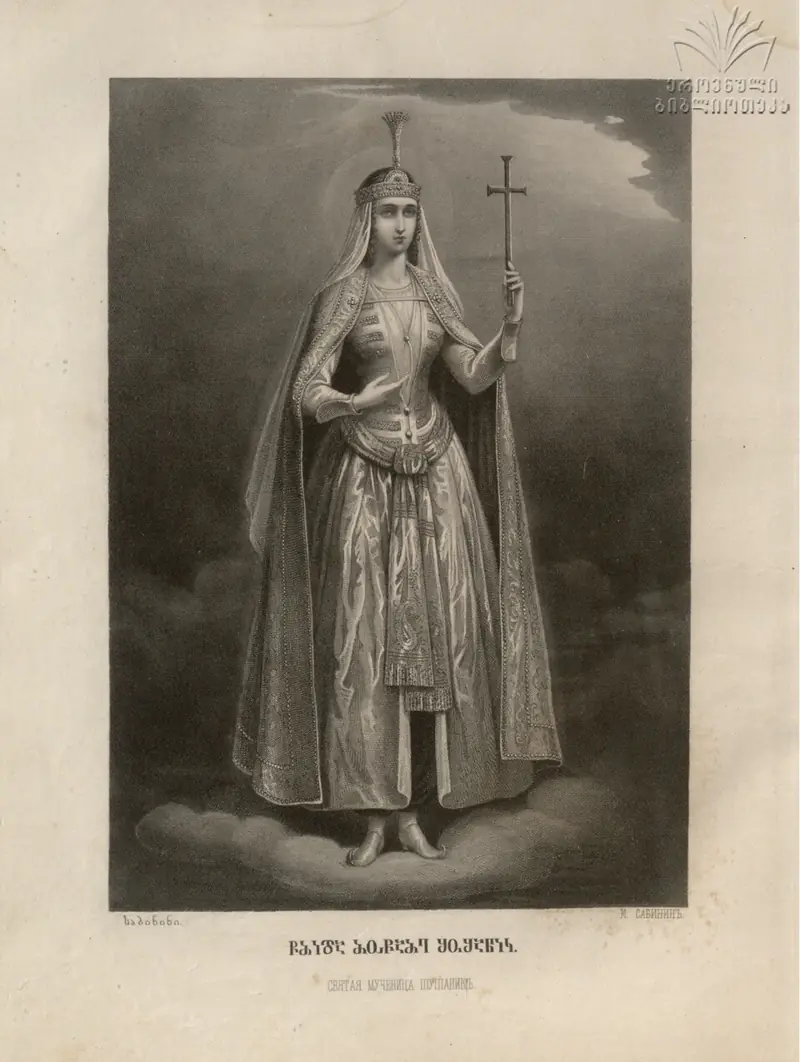
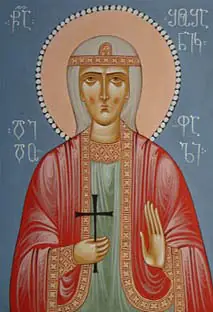
Holy Glorious Martyr Shushanik (+475)
Saint Shushanik was the wife of Varsken, the pitiakhsh of Hereti. Brought up in a Christian family, the queen was distinguished from childhood by the fear and love of God.
At that time the Persians ruled in Kartli. To establish good relations with the Persian royal court, the pitiakhsh Varsken visited Peroz, the king of Persia, denied the true faith of his own will, accepted Mazdaism and promised the king: as soon as I return to Kartli, I will make my wife and children accept my faith too.
Drawing near to Kartli, Varsken sent messengers to the pitiakhsh’s city of Tsurtavi, so that his subjects should meet the pitiakhsh returning to his homeland with fitting honour.
The blessed Shushanik, who had long sensed her husband’s coldness towards the faith, said like a prophet to the man who had been sent: “If he is alive in spirit, may you live, both he and thou. If you are dead in spirit, let that greeting of thine return to thee.” When Shushanik learned of Varsken’s apostasy, she fell to the ground and bewailed with bitter tears the wretched Varsken who had denied Christ: “Pitiable has the wretched Varsken become, for he has denied the true God and confessed the fire-temple and joined himself to the godless.” Then Shushanik left the palace, took her four children with her and took refuge in the church. She stood the children before the altar and cried out to the Lord: “O Lord God, these are given by Thee, and do Thou keep them, enlightened at the holy font by the grace of the Holy Spirit, to be one flock of one Shepherd, our Lord Jesus Christ.”
After Vespers the holy queen made her way to a house standing near the church; “she went in, full of bitterness, and leaned in a corner and wept with bitter tears”.
In the evening Saint Shushanik was visited by her confessor, the priest Jacob. The queen’s plight moved him to tears, and he warned his spiritual daughter: Varsken is merciless and will torment you terribly, so if you have no hope in your own firmness, it is better to avoid a clash with him. To this Saint Shushanik answered: “Better for me is death at his hands than that he and I be joined together and my soul be lost, for I have heard from Paul the Apostle: ‘A brother or a sister is not under bondage, but let them depart.’”
Three days later the pitiakhsh too came to Tsurtavi. The very next day he called the bishops and priests to him and said to them mildly: “Now do not shun me, nor hate me.” But the priests rebuked the denier of the faith: “Thou hast destroyed thyself, and hast destroyed us too.” Angered by the rebuke, Varsken resolved to win his wife over, but Shushanik rebuked him bitterly and sent him word firmly: “Thou hast denied the true God and worshippest fire; and as thou hast denied thy Creator, so I too scorn thee; and though thou bring many torments upon me, I will have no part in thy deeds.”
Enraged by such an answer, Varsken sent his brother Jojik and Bishop Apots to bring Saint Shushanik to the palace. The queen again refused to return home. Jojik knew that Varsken would bring her to the palace by force, and he asked her to return of her own will. Shushanik took the holy Gospel and the books of the holy martyrs, went to the palace and shut herself up there in a small cell.
Two days later Varsken returned to the palace and invited Saint Shushanik too to eat bread with him, his brother and his sister-in-law. The queen did not wish to share a table with the husband who had betrayed Christ, nor any longer to shun the martyr’s crown of Christ: she struck with her hand the cup that Jojik’s wife offered her, and so once more showed her desire to suffer for Christ.
The brutal Varsken beat his wife cruelly. Jojik barely tore the half-dead Shushanik from his hands. The pitiakhsh ordered the queen to be bound and fettered. Then, again by Varsken’s order, the fettered queen was taken into a cell and a guard was set over her.
In the morning the pitiakhsh visited Shushanik. Then he ordered a servant to let no one in to her, and he himself went hunting.
Shushanik’s confessor managed to get in to the imprisoned queen, and when he saw her tortured face he could not bear it and wept aloud. Saint Shushanik said to him calmly: “Do not weep for me, for this night has become for me the beginning of joy.”
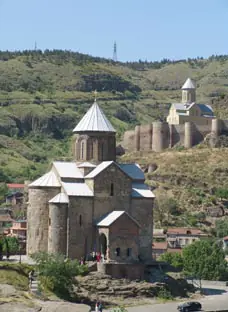
The church of the Theotokos at Metekhi, the resting place of Saint Shushanik
The priest Jacob begged the saint to let him wash the blood from her mouth and the ashes from her eyes and lay a salve on her wounds. Shushanik answered him: “Priest, say not so, for this blood is the cleansing of my sins.”
Before setting out to fight the Huns, Varsken took from Shushanik the jewels he had given her… Meanwhile Great Lent came. The holy queen again moved into a small dark cell near the church and spent the holy Forty Days in fasting and prayer and weeping.
On his return from battle Varsken asked after Shushanik. A courtier close to him advised him to say nothing to her during this holy fast. After the fast Varsken dragged the queen to the palace with blows, gave her three hundred strokes of the rod, and ordered a chain to be put on her neck and her to be cast into prison.
Saint Shushanik spent six years in prison. All that time she never ceased from prayer, fasting and other works pleasing to God. While in prison she herself encouraged the Christians who came to encourage her, and instead of receiving help she herself helped those in need. By her prayer the sick were healed and the childless were given children… By Shushanik’s prayer a leprous Persian woman was healed and turned to the true faith. What horrified the queen most was the conversion of her children to fire-worship — “with great weeping… she beat her head upon the ground” — yet she still uttered her thanksgiving: “I thank Thee, O Lord my God, for they were not mine, but were given by Thee. As Thou wilt, let Thy will be done, O Lord, and keep me from the works of the enemy.”
Before her death the holy martyr blessed everyone and asked to be buried in the place from which her lawless husband had first dragged her; then she repeated the words of the psalm: “Blessed be the Lord my God, for I will lay me down in peace upon it and sleep,” and commended her soul to the Lord.
The clergy and the people buried the tortured queen’s body in the place she had named.
In the sixth century the Georgians moved Shushanik’s remains to Tbilisi and buried them in the church of the Theotokos at Metekhi.
Jacob the Priest. The Martyrdom of the Holy Queen Shushanik — in Old Georgian, in modern Georgian. And now I will tell you with certainty the end of the holy and blessed Shushanik: And now I will tell you with certainty about the end of the holy and blessed Shushanik. I. It came to pass in the eighth year of the king of the Persians that Varsken the pitiakhsh, son of Arshusha, set out for the royal court; for at first he too was a Christian, born of a Christian father and mother. And his wife was the daughter of Vardan, sparapet of the Armenians, concerning whom I have written unto you; by her father she was named Vardan, and her name of love was Shushanik, fearing God, as we have said, from her youth. 1. In the eighth year of the king of the Persians the pitiakhsh Varsken, son of Arshusha, set out for the royal court; at first he too was a Christian and born of a Christian father and mother, and his wife was the daughter of Vardan, the sparapet of the Armenians, about whom I wrote to you. From her father she had the name Vardan, but her pet name was Shushanik; she was God-fearing, as we have said, from her childhood. II. And the pitiakhsh departed from the king of the Persians. And when he came to the borders of Kartli, to the land of Hereti, he took thought to send word, that the aznaurs and his sons and his servants might come out to meet him, that by them, like a serpent, he might enter into the land. And he sent his slave ahead on a post-horse. And when he came to the township whose name is Tsurtavi — 2. And the pitiakhsh came away from the king of the Persians, and when he reached the borders of Kartli, in the region of Hereti, he decided to send word, so that the aznaurs, his sons and his servants should come out to meet him, and that through them he might enter the land like a snake. He sent a slave ahead on a courier’s horse; and when this slave came to the township whose name was Tsurtaveti — III. But the bishop of the pitiakhsh’s household, whose name was Apots, was not there, but had gone to the dwelling of a certain holy man to enquire of some matter. And I too, the priest of Queen Shushanik, was with that bishop. And straightway a deacon came to us from home and told us all this — the coming of the pitiakhsh and the doings of the queen. And we were filled with sorrow and wept with great weeping, embittered at the showing forth of our sins. 3. But the bishop of the pitiakhsh’s household, whose name was Apots, was not there, but had gone to the house of some holy man to pay a visit, and I, the queen’s priest, was with him in that house. And at once a deacon came from home and told him everything: the arrival of the pitiakhsh and what the queen had done; and we were filled with sorrow and, embittered, wept with great weeping over our sins being brought to light. IV. And while we were in this talk, a Persian man came and went in before the blessed Shushanik and said with weeping: “How has such a house of peace become pitiable, and joy been turned into sorrow!” But he was of Varsken’s counsel and said this in guile, and would have ensnared the blessed one. But the holy one perceived his guileful intent and fenced herself about firmly. 4. And while we were in this conversation, a Persian man came and went in to the blessed Shushanik and said with weeping: “How has such a house of peace become so pitiable, and [how] has joy turned into sorrow?” But he had his instructions from Varsken and said this craftily, because he wanted to trap the blessed woman; but the saint saw through his crafty plan and firmly fenced herself off. V. Then he sent Jojik his brother, and Jojik’s wife, his brother’s wife, and the bishop of his household, and said to them: “Say thus: Arise and come to thy place, and hold not such a mind; else I will drag thee hither!” 5. Then he sent Jojik, his brother, and Jojik’s wife, his sister-in-law, and also the bishop of his household, and said to them: “Tell her this: ‘Get up and come to your place, and do not have such an intention, or else you will be dragged here without mercy.’” VI. And after two days that wolf came to the palace and said to his servants: “Today I and Jojik and his wife will eat bread together; let no one else be allowed to come in with us.” And when evening came, they called Jojik’s wife and wished to eat bread together, that they might bring the holy Shushanik too. And when the hour of bread came, Jojik and his wife went in before the holy Shushanik, that she too might eat bread, for she had passed all those days fasting. And when they had pressed her exceedingly and brought her by force to the palace, she tasted of nothing. And Jojik’s wife offered her wine in a cup and pressed her to drink that only. The holy Shushanik said to her in anger: “When has it ever been until now that men and women ate bread together?!” And she flung out her hand and dashed the cup against her face, and the wine was spilled. 6. Two days later that wolf came to the palace and said to his servants: “Today I, Jojik and his wife will eat bread together; let no one else be allowed to come in with us.” When night fell, they called Jojik’s wife and wished to eat in private, so as to bring holy Shushanik as well. As soon as the time for the meal came, Jojik and his wife went in to holy Shushanik so that she too should eat, since she had spent all those days fasting. When they had pressed her too hard, they took her to the palace by force, but she did not taste anything; and Jojik’s wife offered her wine in a cup and pressed her to drink just that. Holy Shushanik said to her angrily: “When has it ever happened until now that men and women ate together?” She swung her hand, dashed the cup into her face, and the wine was spilled. VII. And when it was but dawn, he asked and said to his servant: “How is she from the wound?” And he said to him: “She will not escape it.” Then he himself went in and saw her, and marvelled at her great swelling. And he charged the servant and said: “Let no one go in to see her.” And he himself went hunting. 7. While it was still dawn, he asked his servant: “How is she after the wound?” He told him: “She will not survive.” Then he went in himself, saw her, and was astonished at her swelling. Then he ordered the servant: “Let no one go in to see her,” and went off hunting himself. VIII. And when the Great Fast was come, the blessed Shushanik went near to the holy church and sought out a little cell and shut herself up there. And there was in that cell a little window, and she stopped it up. And she abode in that darkness with fasting and prayer and weeping. And one who was near to the pitiakhsh said to him: “In these holy fasts say nothing to her.” 8. And when Great Lent came, the blessed Shushanik went near the church, found a small cell and withdrew into it. There was a little window in that cell, and she closed that too, and she stayed in that darkness with fasting, prayer and weeping. And someone close to the pitiakhsh told him: “During this holy fast say nothing to her.” IX. A certain deacon of that bishop stood by the holy Shushanik at the time when they brought her out of the palace, and would have said to her: “Stand firm!” And the pitiakhsh fixed his eye upon him, and he had no leisure for more, but said only: “Stand fi…” and fell silent, and began to flee in haste. 9. A deacon of that church was standing by Shushanik at the time when they were bringing her out of the palace, and he wanted to say: “Stand firm!” But the pitiakhsh fixed his eye on him, and since he had no time to say anything more, he said only: “Stand fi…” and fell silent, and quickly turned to flee. X. And on the third Sunday he called one of the guards and asked him and said: “Is that wretched one yet alive?” And he said: “Lord, she is to be thought nearer to death than to life, for she is dying rather of hunger, since she takes no food.” And he said: “Let nothing trouble thee; leave her, let her die!” 10. Only then did he come out of the fortress. And on the third Sunday he called a guard, asked him and said: “Is that poor woman still alive?” He told him: “My lord, she is to be thought nearer to death than to life, and she is dying above all of hunger, because she takes no food.” He said to him: “Let nothing trouble you; let her die.” XI. And from then on her deeds were noised abroad in all Kartli. And men and women came to offer their vows, and whatever any needed was granted by the holy prayer of the blessed Shushanik, which the God who loves mankind gave her: to the childless, children; to the sick, healing; to the blind, the opening of the eyes. 11. After this her story became known throughout Kartli. Men and women came to offer what they had vowed, and whatever anyone needed was granted through the holy prayer of the blessed Shushanik (which the Lord who loves mankind granted her): children to the childless, healing to the sick, the opening of the eyes to the blind. XII. And the holy Shushanik, instead of the care of fine raiment, took up the Psalter in her hands with great zeal, and after a few days learned the hundred and fifty psalms by heart, with which day and night she offered with tears the pleasing song to the King on high. 12. Holy Shushanik, instead of caring for costly clothes, took up the Psalter with great zeal, and after a few days learned the hundred and fifty psalms by heart, with which day and night she offered with tears a pleasing song to the King on high. XIII. And then the pitiakhsh sent messengers and said: “Either do my will and come to the palace, or, if thou come not home, I will send thee to Chor on an ass, or to the Gate with a convoy.” And the holy Shushanik sent answer thus: “Wretched and senseless one, if thou send me to the Gate or to Chor, who knows but that there I may meet with some good and escape this evil?” And the pitiakhsh pondered in his heart those words she had said to him — who knows but that I may meet with some good — lest perchance she become the wife of one of the princes; and from then on he sent no one more to her. But the holy Shushanik spoke of enduring those evil beatings, that she might be pleasing to God. 13. Then the pitiakhsh sent go-betweens to her and said: “Either do my will and come to the palace, or, if you will not come home, I will send you on an ass to Chor or to the Gate.” Holy Shushanik sent back this answer: “Wretched and senseless man, if you send me to the Gate or to Chor, who knows, perhaps there I shall meet with something good and escape this evil.” The pitiakhsh was troubled by these words (that she had said to him: “who knows, perhaps I shall meet with something good”), thinking: “perhaps she will become the wife of one of the princes”, and after this he sent no one more to her; while holy Shushanik said that by enduring these evil beatings she would become pleasing to God. XIV. And as the sixth year in that prison was being fulfilled, from overmuch toil in the labours of her courage the sickness of illness came upon her, which I had foretold her, saying: “Not overmuch, for thou wilt weigh down that flesh of thine, since it cannot bear it, and afterwards thou wilt be able to do no good work, with such severe fasting and continual standing and toiling all night with psalms and hymns.” And she gave her flesh not even a little rest, and became as it were and melted away like ash. 14. And as the sixth year in prison was coming to an end, because of great toil in the labour of her courage an illness came upon her, which I had told her beforehand, saying: “Not too much, for you will overburden that body, and it will not bear it; and afterwards you will be unable to do anything good, with such severe fasting, constant standing and toiling all night with psalms and hymns.” And she did not give her body even a little rest, and she became such, and melted away, like ashes. XV. And as the seventh year was beginning, sores of the flesh came upon the holy and thrice-blessed Shushanik also. And from those unceasing labours her feet swelled, and pus came forth here and there. And the sores were very great, and worms had come upon the sores, which she took up with her own hand and showed me, and gave thanks to God and said: “Priest, let not this seem grievous to thee, for the worm of that place is greater and dieth not.” And when I saw that worm, I was grieved beyond imagining and wept sore; and again she said to me in anger: “Priest, why art thou grieved? Rather than be eaten of those undying worms, better be it to be eaten of these mortal ones here, in this life.” And I answered and said to her: “Did the garment of haircloth seem to thee too little for chastisement? And now thou art glad of these worms!” And she said to me entreating: “Speak to no one of the garment of haircloth while I live, for soon these wretched limbs of mine are to be left behind.” For inwardly she wore haircloth, and no one knew of it save me; but outwardly, to the eyes of men, she wore an Antiochene robe. 15. And as the seventh year was beginning, sores of the body came upon the holy and blessed Shushanik. Because of her unceasing labours her feet swelled, and pus came out here and there. The sores were very large, and worms had got into the sores; she took them up with her own hand, showed them to me and, giving thanks to God, said: “Priest, do not let this seem grievous to you, for the worm of that place is bigger and does not die.” But when I saw that worm I was grieved beyond imagining and wept greatly. Again she said to me angrily: “Priest, why are you grieved? Being eaten by these mortal ones in this life here should be better for us than being eaten by those undying worms.” I answered and said to her: “Did the haircloth seem too little to you for chastisement, and now you are glad of those worms?” But she said to me pleadingly: “Tell no one about the haircloth while I live, for soon I shall leave this wretched body of mine.” [She said this to me] because inside she wore haircloth and no one knew except me, while outside, for the eyes of men, she was dressed in an Antiochene shirt. XVI. And when Jojik heard that the blessed queen, the holy Shushanik, was near to death, he went and took with him his wife and children and his menservants and maidservants, and came to the fortress to see the blessed martyr Shushanik. And when he arrived, he went in only with difficulty, and venerated the precious cross and greeted the holy Shushanik. He sat down beside her and asked her of her pains. And the holy one said to him: “I am well, as God wills; but I too go the way that all must go.” 16. And when Jojik learned that the blessed queen, holy Shushanik, was near to death, he went, taking his wife and children and his menservants and maidservants with him, and came to the fortress to see the blessed martyr Shushanik. When he arrived, he barely managed to get in; he venerated the precious cross, greeted holy Shushanik, sat down beside her and asked her about her pains; and holy Shushanik said to him: “I am well, as God wills, but I too am going the road that everyone must go.” XVII. Then, after Jojik, came the head of the bishops, Samuel, and John the bishop, his fellow, who had been her strengtheners and had laboured greatly; with their households they were with her, and were her servants and partakers and sharers in her labours, and with thanksgiving they sent her on towards the haven of Christ. In like manner there came likewise the great aznaurs and the high-born ladies, aznaurs and common folk of the land of Kartli, who had zealously shared in her labours; they called her blessed and commended her to Christ as one valiant and brave. 17. Then, after Jojik, came the head of the bishops, Samuel, and Bishop John, a member of the same clergy, who had been her strengtheners and had laboured greatly; together with their households they stayed with her as her servants, were partakers and sharers in her labours, and with gratitude sent her on towards the haven of Christ. In the same way there came the great aznaurs and noble ladies of the land of Kartli, aznaurs and common people, who had been zealous partakers in her labours; they called her blessed and commended her to Christ as one valiant and brave. XVIII. And the day of her calling came, and she called Apots, the bishop of her household, and gave him thanks for his compassion. As to a father and foster-father, she commended me to him, this sinful and poor man. And she commended to him the remains of her bones and bade them be laid in the place from which she had first been dragged, and said: “If I am worthy of aught, I, this last, the eleventh-hour labourer of the vineyard, be ye all blessed unto the ages of ages.” 18. And the day of her calling came. She called Apots, the bishop of her household, and thanked him for his compassion. To him, as to a father and foster-father, she entrusted me, a sinful and poor man. She also entrusted to him the remains of her bones and ordered him to bury them in the place from which she had first been dragged out, and said to him: “If I am worthy of anything, I, this last one, the eleventh-hour labourer of the vineyard, may you all be blessed to the ages of ages.” XIX. And then straightway the blessed bishop John brought a holy linen cloth to wrap her holy and precious relics. And so we others took up that body, greatly toilworn and eaten of worms, and washed it of the earthy worms and the pus, and clothed it in that linen. 19. And then the blessed Bishop John quickly brought a holy linen cloth to wrap her holy and precious relics, and so the rest of us took up that body, greatly toilworn and eaten by worms, washed it of the earthy worms and the pus, and wrapped it in that linen. XX. And the beginning of the tortures of the holy Shushanik is in the month of Apnisi, on the eighth of the month, on a Wednesday; and her second beating, after Easter, on the Monday of Paschaltide; and again torture on the nineteenth of the month of Vardobisa; and her end on the seventeenth of the month of Ikdonberi, on the commemoration of the holy and blessed martyrs Cosmas and Damian. 20. And the beginning of holy Shushanik’s tortures is in the month of January, on the eighth of the month, on a Monday; and her second beating afterwards, in Easter week, on a Monday; and again torture on the nineteenth of May; and her end on the seventeenth of October, at the commemoration of the holy and blessed martyrs Cosmas and Damian,
And she was ever troubled in heart over the wicked nature of her husband, and besought all to make prayer for him, that God might change him from that nature of folly and he might come to the understanding of Christ.
But of this wretched and thrice-pitiable Varsken, the utterly lost, how shall anyone tell how he cast away the blessed hope of Christ? Or who would not weep for him, who had seen neither affliction, nor fear, nor sword, nor bonds for Christ’s sake?!
For when he stood before the king of the Persians, it was not to receive honour, but he offered himself as a gift to that king by denying the true God, and he worshipped fire, for he cast himself away from Christ on every side.
And this pitiable one asked a wife of the king of the Persians, that he might please the king, and said to him thus: “My lawful wife and children, them too will I turn to thy law, even as I myself am turned.” This he promised, which he did not have in hand from Shushanik. Then the king rejoiced and granted him the king’s daughter to wife.
Because of her husband’s wicked nature she was always troubled, and she begged everyone to offer prayer for him, that God might change him from his foolish nature and he might draw near to the understanding of Christ.
But as for the wretched and thrice-pitiable Varsken, this utterly lost man, how can anyone tell how he threw away the blessed hope of Christ? Or who will not weep for him, who had seen neither affliction, nor fear, nor sword, nor imprisonment for Christ’s sake?
For when he came and stood before the king of the Persians, [he stood there] not to receive honour, but he offered himself as a gift to this king by denying the true God, and he worshipped fire, so as to separate himself from Christ in every way.
Moreover, this pitiable man asked the king of the Persians for a wife, so as to please the king, and said to him: “My first wife and my children I will turn to your worship just as I have turned” (he was promising what he did not have in hand from Shushanik). Then the king rejoiced and ordered that the king’s daughter be his wife.
And when he came and went in before Shushanik our queen, he gave her greeting; and the blessed Shushanik, as a prophet, said to him: “If he be alive in spirit, may ye live, both he and thou. If ye be dead in spirit, let that greeting of thine return unto thyself!” And that man durst not speak to her. But the holy Shushanik adjured him and asked him for certain. And the man told the truth and said to her: “Varsken hath denied the true God.”
When the blessed Shushanik heard it, she fell upon the ground and beat her head downward and said with bitter tears: “Pitiable is the wretched Varsken become, for he hath denied the true God and confessed the fire-temple and joined himself unto the godless.”
And she arose and left her palace, and with the fear of God went into the church, and took with her those three sons and one daughter, and set them before the altar, and prayed thus and said: “O Lord God, these are given of Thee, and do Thou keep them, enlightened from the holy font by the grace of the Holy Spirit, to be one flock of one Shepherd, our Lord Jesus Christ!”
And when they had finished the hour of Vespers, she found a little house near the church, and went in there full of bitterness, and leaned in a corner and wept with bitter tears.
And when he went in to holy Shushanik, our queen, he greeted her; and the blessed Shushanik, like a prophet, said: “If he is alive in spirit, good health to both him and you; but if you are dead in spirit, let that greeting of yours come back to you.” The man did not dare to speak, but holy Shushanik made him swear and questioned him to get at the truth, and the man told her the truth and said that “Varsken has denied the true God”.
As soon as the blessed Shushanik heard this, she fell to the ground, beat her head downward and said with bitter tears: “The wretched Varsken has become pitiable, for he has denied the true God, confessed the fire-temple and joined himself to the godless.”
Shushanik got up, left her palace and went into the church with the fear of God. She took with her her three sons and one daughter, set them [before God] in front of the altar, and prayed thus: “O Lord God, they are given by You, and do You keep them, enlightened from the holy font by the grace of the Holy Spirit, that they may be one flock of one Shepherd, our Lord Jesus Christ.”
When they had finished the service of Vespers, she saw a small house near the church, went inside full of bitterness, leaned in a corner and wept with bitter tears.
But I departed early and came to that township wherein the blessed Shushanik was. And when I saw her embittered, I too wept with her. And I said to the blessed Shushanik: “Thou art to enter into a great contest, O queen! Guard the faith of Christ, lest the enemy, like a gangrene, find pasture in thee.” And the holy Shushanik said to me: “Priest, I too am made ready for a great contest.” And I said to her: “It is so. Be thou valiant, patient and long-suffering.” And she said to me: “For me alone are these afflictions!”
And I said to her: “Thy afflictions are our afflictions, and thy joy is our joy. Not only wast thou our queen, but thou didst look upon us all as children.”
And I said to the blessed one: “What is thy secret intent? Tell me, that I may know it and write down thy labour.” And she said to me: “Why askest thou me this?” And I answered and said to her: “Standest thou firm?” And she said to me: “God forbid that I should share in the deeds and sins of Varsken!” I answered and said to her: “He hath a bitter mind; he will cast thee into beating and great torment.” And she said to me: “Better for me is death at his hands than that he and I be joined together and my soul be lost, for I have heard from Paul the Apostle: ‘A brother or a sister is not under bondage, but let them depart.’” And I said: “It is so.”
But I left early and came to the township where the blessed Shushanik was. When I saw her so embittered, I too wept with her. And I said to the blessed Shushanik: “You are entering a great battle, my queen. Guard the faith of Christ, so that the enemy does not find pasture in you like gangrene.” Holy Shushanik said to me: “Priest, I too am prepared for a great battle.” And I said to her: “So it is. Be brave, patient and long-suffering.” And she said to me: “This affliction is for me alone.”
And I said to her: “Your affliction is our affliction and your joy is our joy. You were not only our queen, but you looked on all of us as your children.”
And I said to this blessed woman: “Tell me what you have in mind, so that I may know it and write down your labour”; but she said to me: “Why do you ask me this?” I answered and said: “Are you standing firm?” And she said to me: “God forbid that I should share in Varsken’s deeds and sins.” I answered and said: “He has a bitter intention; he will throw you into great beatings and torment”; and she said to me: “Death at his hand would be better for me than his and my coming together and the loss of my soul, for I have heard from Paul the Apostle: ‘A brother or sister is not enslaved, but let them separate.’” And I said: “So it is.”
And after three days Varsken the pitiakhsh came. And the Persian spoke to him secretly and said: “As I have perceived, thy wife hath departed from thee. And I say unto thee: speak no harsh word unto her, for the nature of women is narrow.”
And on the morrow, when the pitiakhsh arose, he called us, the priests, and we went. And he met us with joy and said to us: “Now shun me not, neither hate me.” And we answered and said to him: “Thou hast destroyed thyself, and hast destroyed us also.” Then he began to speak and said: “Wherefore hath my wife taken such power over me as to do such a thing? Now go and say to her: Thou hast overthrown my image and cast ashes upon my bed, and hast left thy place and gone elsewhere.” And the holy Shushanik said: “Did I set up that image, that I should overthrow it? But thy father raised up martyria and built churches, and thou hast corrupted thy father’s works and turned his good things into other. Thy father brought the saints into his house, but thou hast brought in demons; he confessed and believed the God of heaven and earth, but thou hast denied the true God and worshippest fire; and as thou hast denied thy Creator, so I too scorn thee. And though thou bring many torments upon me, I will have no part in thy deeds!”
And we told all this to the pitiakhsh. And he set his heart against her and raged over her.
Three days later the pitiakhsh Varsken came. The Persian told him secretly: “As I have come to understand, your wife has turned away from you, and I tell you: do not say any harsh word to her, for the nature of women is narrow.”
The next day, when the pitiakhsh rose, he called us, the priests, and we went. He received us kindly and said: “Now do not shun me, nor hate me.” But we answered and said to him: “You have destroyed yourself and destroyed us too.” Only then did he begin to speak, and said: “Why has my wife presumed to lord it over me and do such a thing? Now go and tell her: «You have thrown down my image and poured ashes over my bed; you have left your place and gone elsewhere.»” But holy Shushanik said: “It was not I who set up that image, that I should throw it down; but your father raised martyria and built churches, while you have defiled your father’s works and turned his good deeds upside down. Your father brought saints into his house, and you have brought in devils. He confessed and believed in God, the maker of heaven and earth, but you have denied the true God and worship fire. So, as you have insulted your Creator, so I insult you, and even if you inflict many torments on me, I will not share in your deeds.”
And we reported all this to the pitiakhsh, and he was enraged and roared because of her.
And when they came and went in before the queen and spoke many persuading words to her, then the holy Shushanik said to them: “Wise men, ye speak well; yet think not that I will still be his wife. I thought that ye would turn him unto me, and that he would confess the true God; and now ye compel me to do this?! God forbid it of me! And thou, Jojik, art no more my brother-in-law, nor am I thy brother’s wife, nor is thy wife my sister, ye who are on his side and sharers in his deeds.” Jojik said to her: “I know that now he will send servants and drag thee away.” And the holy Shushanik said: “If he bind me and drag me, I rejoice, for by that means shall be my severance from him.”
And when they heard this from her, they all wept; and Jojik arose and went out weeping. And the holy Shushanik said to the bishop: “How biddest thou me to trust him, when he hath denied God?!” And Jojik entreated her and said: “Thou art our sister; destroy not this royal house.” The holy Shushanik said to him: “I know that I am a sister and that we were brought up together; but this I cannot do, that blood should be shed and ye all be made guilty.”
And when they pressed her sore, the holy and blessed Shushanik arose and took her Gospel with her, and said thus with weeping: “O Lord God, Thou knowest that I go to death with all my heart.”
This she said and went with them, and took with her her Gospel and the holy books of the martyrs. And when she entered the palace, she did not sit in her own gallery, but in a little cell. And the holy Shushanik lifted up her hands to heaven and said: “O Lord God, neither was any of the priests found merciful, nor did any layman appear among this people; but all have delivered me up to death, to Varsken, the enemy of God.”
When they arrived and went in to the queen, they spoke many persuasive words to her; then holy Shushanik said to them: “Wise men, you speak well, but do not believe that I will still be his wife. I thought that you would turn him to me and he would confess the true God, and now you are forcing me to do this? God forbid it! And you, Jojik, are no longer my brother-in-law, nor am I your brother’s wife, nor is your wife my sister, since you are on his side and share in his deeds.” Jojik said to her: “I know that he will now send servants and drag you away.” Holy Shushanik said: “If he binds me and drags me, I shall be glad, for in this way I shall be rescued from him.”
When they heard this from her, everyone wept, and Jojik got up and went outside in tears. Holy Shushanik said to the bishop: “How can you tell me to trust him, when he has denied God?” But Jojik pleaded with her: “You are our sister; do not ruin this royal house.” Holy Shushanik said to him: “I know that I am your sister, that we were brought up together, but I cannot do that, lest blood be shed and all of you be held responsible.”
And when they pressed her hard, the blessed Shushanik got up, took her Gospel with her, and said thus with weeping: “O Lord God, You know that I am going to death with all my heart.”
She said this and went with them. She took with her her Gospel and the holy books of the martyrs. When she entered the palace, she sat not on her own throne but in a small cell. Holy Shushanik raised her hands to heaven and said: “O Lord God, not one of the priests proved merciful, nor did any layman appear among this people, but all have brought me to death, to Varsken, the enemy of God.”
Then Varsken fell to reviling her shamefully and trampled her with his feet, and took a poker and struck her upon the head and broke it open, and bruised one of her eyes. And he struck her face mercilessly with his fist and dragged her to and fro by the hair; like a raging beast he howled and shouted as one mad. Then Jojik his brother rose up to help, and they struggled until he too was beaten, and the veil was torn from her head, and hardly, as a lamb from a wolf, he took her out of his hands. And the holy Shushanik lay upon the ground as one dead, and Varsken reviled her kindred and called her the destroyer of his house. And he commanded that she be bound and fetters put upon her feet.
And when he had cooled a little from his wrath, the Persian came and besought him fervently that the holy Shushanik might be loosed from those bonds. And as he besought him much, he commanded that she be loosed and brought into a cell and closely kept by one servant, and that no one else go in to see her, neither man nor woman.
Then Varsken began to revile her shamefully and kicked her with his feet; he took a poker and struck her on the head and split it open. He made one of her eyes swell, and struck her in the face mercilessly with his fist, and dragged her about by the hair; like a raging beast he screamed and shouted like a madman. Then Jojik, Varsken’s brother, rose up to help, and they fought [until he too was beaten, and he tore the veil from her head], and with difficulty, like a lamb from a wolf, he got her out of his hands. And holy Shushanik lay on the ground like one dead, while Varsken cursed her kin and called her the ruin of his house. Then he ordered her to be bound and fetters put on her feet.
When Varsken had calmed a little from his anger, the Persian came and pleaded fervently with him to free holy Shushanik from the fetters; and because he pleaded so much, he ordered her to be let go and taken into a cell; she was closely guarded there by one servant, and no one else went in to see her, whether man or woman.
But I arose and went and said to the guard: “Let me in alone, that I may see her wound.” And he said to me: “What if he learn of it and kill me?” And I said to him: “Wretch, art thou not her nursling? And if he kill thee for her sake, what is that?” Then he let me in secretly.
And when I went in, I saw her face bruised and swollen, and I lifted up my voice and wept. And the holy Shushanik said to me: “Weep not for me, for this night hath become for me the beginning of joy.” And I said to the holy Shushanik: “Bid me, and I will wash that blood from thy face and the ashes that have fallen into thine eyes, and lay salve and medicine upon thee, that perchance thou mayest be healed.” And the holy Shushanik said to me: “Priest, say not so, for this blood is the cleansing of my sins.”
And I pressed her a little to take food, which Bishop Samuel and John had sent, for they cared for her secretly and comforted her. Then the holy Shushanik said to me: “Priest, I cannot taste, for my jaws and some of my teeth are broken.” Then I took a little wine and soaked some bread, and she tasted a little. And I made haste to go out.
Then the holy Shushanik said to me: “Priest, shall I send him these jewels of his, in case he asks for them? For in this life I have need of them no more.” But I said: “Be in no haste; let them be with thee.” And while we were still taking counsel of this, a youth came and said: “Is Jacob there?” And I said: “What wouldst thou?” And he said to me: “The pitiakhsh calls thee.” And I marvelled why he should call me at this hour. And I hastened and went, and he said to me: “Knowest thou, priest, that I go to war against the Huns? And I will not leave my jewels to her. Since she is not my wife, someone will be found who will wear them out. Go and bring me all of it, whatever there is!” And I went and told the holy Shushanik. And she rejoiced greatly and gave thanks to God and sent me all of it. And I brought it to the pitiakhsh, and he received it from me and looked it over, and found everything kept safe. And again he said: “Hereafter too someone will be found who will be adorned with this.”
But I got up, went and said to the guard: “Just let me in alone, and I will see her wound.” He said to me: “What if he finds out and kills me?” And I said to him: “Oh, wretched man, were you not brought up by her? Even if he kills you for her sake, what of it?” Then he let me in secretly.
When I went inside, I saw her body split and swollen. My voice failed me from weeping, but holy Shushanik said to me: “Do not weep for me, for this night has become the source of joy for me.” I said to holy Shushanik: “Tell me to, and I will wash that blood off your face and the ashes that have fallen into your eyes. I will put salve and medicine on you, so that perhaps you may be healed by night.” But holy Shushanik said to me: “Priest, do not say that, for that blood is the cleansing of my sins.”
Then I made her take a little of the food that had been sent by Bishop Samuel and John, for they cared for her in secret and comforted her. Then holy Shushanik said to me: “Priest, I cannot taste anything, for my jaws and some of my teeth are broken.” Then I took a little wine and bread, soaked it, and she tasted a little. But I was in a hurry to leave.
Then holy Shushanik said to me: “Priest, I will send him these jewels; perhaps he is asking for them, for I no longer need them in this life.” But I said to her: “Do not hurry; let them stay with you.” And while we were in this discussion, a young man came and said: “Is Jacob there?” I said: “What do you want?” He said: “The pitiakhsh is calling for you.” I wondered why he was calling me at this hour. I hurried and went, and he said to me: “You know, priest, I am going to fight the Huns, and I will not leave my jewels to her. Since she is not my wife, someone will be found who will wear them out. Go and bring me everything there is here.” So I went and told holy Shushanik, and she was very glad and thanked God; then she brought me everything and I took it to the pitiakhsh, and he received it from me, looked it over and found everything kept safe, and again he said: “Later on too someone will be found who will adorn herself with this.”
And when Easter Monday came and the pitiakhsh returned from that war with the Huns, the devil was digging at his heart. And he arose and went to the church and said to Bishop Apots: “Give me my wife; why dost thou part her from me?” And he began to revile and blaspheme God cruelly. And a certain priest said to him: “Lord, why doest thou so, and speakest thus evilly, and revilest the bishop, and speakest to the holy Shushanik in wrath?” And he struck that priest on the back with his staff. And he durst speak no more.
And so he dragged the holy Shushanik through mud and over thorns from the church to the palace, dragging her like one dead; and here and there thornbushes had been strewn beneath; and he himself set his feet upon the thornbushes, and Shushanik’s skirts and flesh were torn to shreds upon the thorns. And so they brought her into the palace.
And he commanded that she be bound and beaten. He railed and said: “Lo, here, thy church hath not availed thee, nor these backers of thine, the Christians, nor that Lord of theirs!”
And when they had beaten her some three hundred strokes of the rod, no cry of woe came forth from her mouth, nor any groan. Then the holy Shushanik said to the lawless Varsken: “Wretch, thou hadst no pity even on thyself, and didst depart from God — and wouldst thou pity me?!”
And when he saw the great blood that ran down from her tender flesh, then he commanded that a chain be laid upon her neck. And he commanded a chamberlain that they take the holy Shushanik to the fortress and set her in a dark prison, and let her die.
And when Easter Monday came and the pitiakhsh returned from the fight against the Huns, the devil was digging at his heart. He got up, went to the church and said to Bishop Apots: “Give me my wife from there; why do you part her from me?” He began to curse and cruelly blaspheme God. But a priest said to him: “My lord, why do you act like this, speaking so wickedly, cursing the bishop and speaking to holy Shushanik in anger?” But he struck that priest on the back with his staff, and he no longer dared to say a word.
And so he dragged holy Shushanik through the mud and over thorns, and dragged her from the church to the palace like one dead, with thornbushes strewn beneath her here and there; he himself set his feet on the thornbushes, and Shushanik’s skirts and body were torn to shreds by those thorns. So they brought her to the palace.
Varsken ordered her to be bound and beaten, raging and saying: “There, your church has done you no good, nor that backing of yours — the Christians — nor their Lord.”
When they had struck her with the rod almost three hundred times, not a cry of woe escaped her lips, nor a groan. Then holy Shushanik said to the lawless Varsken: “Wretched man, you did not pity even yourself but turned away from God, and will you pity me?”
And when Varsken saw the great amount of blood running down Shushanik’s tender body, he ordered a chain to be put on her neck, and ordered a chamberlain to take holy Shushanik to the fortress and lock her in a dark prison, so that she might die there inside.
Then they brought her out, and the holy Shushanik was led unshod and with her hair let down, as one of the despised; and no one durst cover her head, for the pitiakhsh rode behind on horseback in her track and reviled her with many revilings.
And there went with the holy one a great throng of women and men, a multitude without number, for they followed after her, and lifted up their voice and wept, and tore their cheeks, and piteously shed their tears for the holy Shushanik. And the holy Shushanik looked back upon the people and said to them: “Weep not, my brothers and my sisters and my children, but remember me in prayer. And from henceforth I am parted from you, for ye shall see me no more come out of the fortress alive.” And when the pitiakhsh saw that throng and the weeping of men and women, of old and young, he rode to and fro on horseback and drove them all to flight. And when they came to the bridge of the fortress, the pitiakhsh said to the holy Shushanik: “So far only is thy going on thine own feet, for thou shalt not come out alive, save four bear thee out.”
And when they entered the fortress, they found a little house on the north side, small and dark, and there they shut the holy one in. And the chain that lay upon her neck lay there still, and the lawless Varsken sealed it with his seal. And the holy Shushanik said: “I am glad of this, that I be tormented here and rest there.” And the pitiakhsh said to her: “Yes, yes, rest!”
Then he set guards over her and charged them to kill her with hunger. And thus he said to them: “I tell you, if anyone go in to her, man or woman, look to yourselves and your wives and children and houses! I shall be guiltless of what I do to you!” Then he went out of the fortress.
Then they brought her out, and they led the blessed Shushanik barefoot and with her hair let down like one of the common people, and no one dared cover her head, for the pitiakhsh rode behind in her track and cursed her with many curses.
And a great crowd of men and women went with the saint — a countless multitude — for they followed her, raised their voices, wept, beat their breasts, scratched their cheeks, and piteously shed their tears for holy Shushanik; and holy Shushanik looked back at the people and said to them: “Do not weep, my brothers and sisters and my children, but remember me in prayer; and from now on let me be parted from you, for you will not see me come out of the fortress alive.” When the pitiakhsh saw this crowd and the weeping of men and women, of old and young, he rode this way and that and chased them all away. When they reached the bridge of the fortress, the pitiakhsh said to holy Shushanik: “This much walking on your own feet will do for you, for you will not come out alive — only if four carry you out.”
When they entered the fortress, they found a small room on the north side, small and dark, and locked the saint in there; and the chain that had been put on her neck stayed on her as before; the lawless Varsken sealed it with his seal, and holy Shushanik said: “I am glad of this, that I shall be tormented here and rest there.” But the pitiakhsh said to her: “Yes, yes, rest!”
Then he set guards over her and ordered them to kill her with hunger, saying thus: “I tell you, if anyone goes in to her, man or woman, [then] look to yourselves, your wives, children and houses. I shall be blameless for what I do to you.”
But I spoke to the guard with many entreaties and promised him a certain vessel. And hardly did he take it upon himself to let me in, and he said to me: “When it is dark, come thou alone.” And when the guard brought me in and I saw that lamb of Christ, fairly adorned with those bonds as a bride, my heart could not bear it and I wept greatly. And the holy Shushanik said to me: “Weepest thou for this good, priest?” And the guard said to me: “Had I known this, I would not have let thee in.” And I began to speak and to strengthen her, as much as God gave me to speak. And I parted from her and went in haste to my dwelling.
And the pitiakhsh set out for Chor. And Jojik his brother was not present when this thing was done to the holy Shushanik. And when Jojik arrived, he followed after the pitiakhsh, and overtook him at the borders of Hereti, and besought him much that he would command her to be loosed from those bonds. And as he wearied him greatly, he commanded that she be loosed from the bonds only. And when Jojik came, he took the chain from her neck; but the holy Shushanik would not accept release from the fetters, and wore them to her end. For six years she fulfilled in that fortress, and flowered with divine order: with fasting always, with vigil, with standing, with prostrations untiringly, and with reading of books unwearyingly; she made the whole fortress shine and adorned it with that spiritual harp.
But I pleaded with the guard at great length and promised him some article. With difficulty he took it upon himself to let me in, and said to me: “When it gets dark, come, only you alone.” And when the guard let me in, I saw the lamb of Christ beautifully adorned like a bride with those fetters; and since my heart could not bear it, I wept greatly, but holy Shushanik said to me: “Are you weeping over these good things, priest?” The guard said to me: “Had I known this, I would not have let you in.” I began to talk to her and strengthen her, as much as God gave me to say; then I parted from her and went quickly to my house.
The pitiakhsh went to Chor. Jojik, his brother, had not been present when this happened to holy Shushanik. When Jojik came, he went after the pitiakhsh, caught up with him at the borders of Hereti and pleaded with him earnestly to order her release from those fetters; and because he pressed him greatly, he ordered her freed from the fetters only. When Jojik came, he removed the chain from her neck, but holy Shushanik would not accept release from the fetters, until she died with those fetters on, for she spent six years in the fortress and flourished in divine order: in fasting, in constant vigil, in prayer and supplication, in standing, in prostration and tears untiringly, and in reading books without weariness. She made that whole fortress shine and adorned it with her spiritual harp.
There was a certain woman, a Persian, a magus, who had the pain of leprosy. And she came to the holy Shushanik, and she taught her to leave the religion of the magi and become a Christian. And the woman took it upon herself speedily. And she taught the woman and said to her: “Go to Jerusalem and thou shalt be cleansed of that leprosy of thine.” And she received it zealously and set out on that road in the name of our Lord Jesus Christ. And she was healed of that pain. And when she turned back with great joy and came again to that place, she came to the holy Shushanik to give thanks, and went to her home rejoicing, made whole.
There was a Persian woman, a magus, who suffered the pain of leprosy. She came to the blessed Shushanik, who taught her to leave the religion of the magi and become a Christian; the woman soon took this to heart, and Shushanik taught her and said to her: “Go to Jerusalem, and you will be cleansed of that leprosy of yours.” She listened zealously, set out on that road in the name of our Lord Jesus Christ, and was healed of her pain. When she came back with great joy and arrived there again, she came to holy Shushanik to give thanks, and went home happy and healed.
And they told the blessed Shushanik: “He hath turned thy children to the religion of the magi.” Then she began to bow down before God with great weeping, and beat her head downward, and sighed and said: “I thank Thee, O Lord my God, for they were not mine, but were given of Thee. As Thou wilt, let Thy will be done, O Lord, and keep me from the works of the enemy.”
And I went and saw the holy Shushanik worn and stiffened with weeping. And the holy bishop had sent her food, and when I pressed her greatly, she tasted but a little, and we gave thanks to God. And until that time her children used to come to see their mother; but when they were turned and had denied God, they durst no more see her; rather, she loathed even to hear their name.
And they told the blessed Shushanik: “Varsken has turned your children to the religion of the magi.” Then she began to bow down before God with great weeping and, beating her head downward, she sighed and said: “I thank You, my Lord, for they were not mine, but given by You. As You will, let Your will be done, Lord, and keep me from the works of the enemy.”
And I went and saw holy Shushanik worn out and stiffened from weeping, and that the holy bishop had brought her food. When I pressed her hard, she tasted only a little, and we gave thanks to God. Until that time her children used to come to see their mother, but when they had been won over and had denied God, they no longer dared to see her. On the contrary, she loathed even hearing their name.
And the pitiakhsh chose his own foster-brother to bring her to the palace. And when the man said to her: “Hearken to me and come down to the palace, and lay not waste that house of yours”, the holy Shushanik said to him: “Say to that godless one: Thou didst kill me and say to me: Alive on thy feet thou shalt not come out of the fortress. And now, if thou art able to raise the dead, raise first thy mother, who is buried at Urd; but if thou art not able to raise her, neither art thou able to bring me out, save thou drag me out.” And when he told the pitiakhsh that word, he said: “Truly I said that.”
And on the next day someone came in and said to the holy Shushanik: “Thou didst answer him well with that word, for by that means he purposed to beguile thee, and another evil design against thee lay upon his heart.” The holy Shushanik said to him: “And think not thou that God is asleep, who prepareth the words in the mouth of man. For the Lord Himself saith: I will give answer in your stead.”
The pitiakhsh chose his own foster-brother to bring Shushanik to the palace. And when this man said to her: “Listen to me, come down to the palace and do not ruin your house”, holy Shushanik answered thus: “Tell that godless man: «You killed me and told me: you will not come out of that fortress on healthy feet»; and now, if you can raise the dead, first raise your mother, who is buried at Urd; but if you cannot raise her, neither can you bring me out of here — only if you drag me out.” When they told the pitiakhsh this, he said: “I really did say that.”
The next day someone went in and said to holy Shushanik: “You answered him well with that word, for that was how he planned to deceive you, and he had another wicked intention in his heart against you.” Holy Shushanik said to him: “And do not think that God is asleep, who prepares the words for a man’s mouth, for the Lord Himself says: ‘I will answer in your place’ (cf. Luke 12:12).”
And in the great fasts before Easter, those fifty days, through six years, neither by day nor by night did she sit down, nor sleep, nor take any food, save that on the Lord’s day she partook of the Body and Blood of Christ our God; and a little broth made of pears, and that too but little, she would take; but the taste of bread she saw not until Easter.
And from the day that they imprisoned her in that fortress, she laid not her head upon a pillow, but laid a mud brick for a pillow. And for bedding there was one old rag. And for the eyes of men a little leather pillow was set at the head. And for prostrations a little piece of hide was cast down. And fleas and lice beyond imagining were spread over that place.
In the season of summer the heat of the sun burned like fire; hot winds, and harmful waters; and the dwellers of that place were full of sickness, swollen with dropsy and yellowed, pitted and wasted and scabbed, blotched, swollen of face and short of life; and there is no old man in those lands. And in such a fortress she was imprisoned six years, and in those heavy bonds she glorified God.
And in the great Lent before Easter, those fifty days, for six years she did not sit down by day or by night, nor sleep, nor take any food, except that on Sunday she received the Body and Blood of our God, Christ, and took only a little juice made from vegetables, and that too only a little; and she did not taste bread until Easter.
And from the day they imprisoned her in the fortress she did not lay her head on a pillow, but had a brick laid for a pillow, and for bedding there was an old rag; for the eyes of men she had a leather cushion for a pillow, and for [making] prostrations she had thrown down a small piece of leather; and unimaginable fleas and lice infested that place.
[There], in summertime, the heat of the sun burned like fire; there were hot winds and harmful waters, and the inhabitants of that place were full of sickness, swollen with dropsy, yellowed, pitted, sore, scabbed, sick in the face, swollen-faced and short-lived; in those parts there is no one old. In such a fortress she was imprisoned for six years, and in heavy fetters she glorified God.
But Jojik quickly arose and confessed his former lawless deeds, and besought the holy Shushanik and said: “Bride and handmaid of Christ, ask of God that He forgive me my many sins.” And the holy Shushanik said to him: “If thou hast done nothing else, in thy youth, God will forgive thee.” And Jojik said: “For this very thing have I come to thee, that I may do nothing that is not pleasing to God.” The holy Shushanik said: “If thou do so, thou art made undying to me by that word, and God will add to the days of thy life.”
And then, when Jojik perceived that on that day the holy one would depart from this flesh, he said: “Bless me and my wife, thy handmaid, and my children and my menservants and maidservants. And if we have sinned against thee in aught, as men of this passing time and lovers of the world, forgive us and remember not our wickednesses.” And the holy Shushanik said to Jojik and his wife: “Ye made light of this matter of mine, for there was found none among men who had mercy and pain for me, who would have brought that godless husband of this passing world to reason.” And they said to her: “Apart from thee we laboured much, but there was no hearing, nor any answer.” Then the holy Shushanik said: “Let me and Varsken the pitiakhsh be judged there, where there is no respect of persons before the Judge of judges and the King of kings, where there is no distinction of man and woman, where he and I shall speak an equal word before our God Jesus Christ. May the Lord reward him, as he untimely plucked my fruits, and quenched my lamp, and withered my flower, and darkened the beauty of my comeliness, and brought low my glory. God judge between him and me. But I now thank God for this, that through his torments I shall find consolation, and for his beatings and draggings I shall attain to rest, and for his senselessness and mercilessness I look for mercy through Jesus Christ my Lord.”
And they wept bitterly at all these words of hers, and said to her: “Forgive us our faults and bless us, holy martyr and blessed witness of Christ God.” And the holy Shushanik said: “May God forgive you whatsoever ye have done.” Then she blessed Jojik and his wife and his children and his menservants and maidservants, and all his court and palace. And she charged them to walk in the ways of God and said to them: “All this life, as the flower of the field, is passing and unstable; and he who sowed shall reap, and he who scattered for the poor hath gathered, and he who loseth himself shall find Him who glorified him.” And she took leave of them and sent them away in peace.
But Jojik quickly got up; he confessed his former lawless deeds and pleaded with holy Shushanik, saying to her: “Bride and handmaid of Christ, ask God to forgive me my many sins”; and holy Shushanik said to him: “If you have done nothing else in your youth, may God forgive you.” And Jojik said: “That is why I have come to you: so that I do nothing that is not pleasing to God.” Holy Shushanik said: “If you do so, you will become undying to me by that word, and God will add to the days of your life.”
Then, when Jojik perceived that the saint would leave this body that day, he said to her: “Bless me, my wife — your handmaid — my children and my menservants and maidservants, and if we have sinned against you in anything, as people of this passing world and lovers of the world, forgive us and do not remember my wickedness.” But holy Shushanik said to Jojik and his wife: “You treated my cause carelessly, for no one was found among men who had pity and compassion for me, who would bring this godless husband of this passing world to reason.” They answered her: “Apart from you we laboured greatly, but there was neither hearing nor answer.” Then holy Shushanik said: “Varsken the pitiakhsh and I will be judged there, where there is no favouritism before the Judge of judges and King of kings, where there is no distinction between man and woman, where he and I will speak as equals before our Lord Jesus Christ. The Lord will repay him, as he reaped my fruit before its time, put out my lamp, withered my flower, darkened the beauty of my comeliness and brought low my glory. So may God judge between him and me; and I now thank God for this, that through torment at his hands I shall find mercy, through his beatings and draggings I shall reach rest, and in return for his senselessness and mercilessness I look for mercy from my Lord Jesus Christ.”
And they wept bitterly at all these words of hers, and said to her: “Forgive us our guilt and bless us, holy martyr and blessed witness of Christ God.” And holy Shushanik said: “May God forgive you whatever you have done.” Only then did she bless Jojik and his wife, his children, his menservants and maidservants, and all his court and palace. And she charged them to walk in the ways of God, and said to them: “All this life, like the flower of the field, is passing and unstable. Whoever sowed has reaped, and whoever scattered for the poor has gathered, and whoever loses himself will find Him who glorified him.” And she took leave of them and sent them away in peace.
And all those bishops and aznaurs together asked one request of her: that she would appoint the fetters of her feet as a protection and a blessing for all; whereto the holy Shushanik said: “What am I, this unworthy one? But for your love of God may the priest fulfil your desire in this matter. And what am I able to do? But may Christ, who filleth all, fill you with every good thing, ye who for my sake have laboured and shared in these my sufferings and afflictions and torments. And I, beloved, behold, go on my road prepared beforehand, the everlasting one. In place of this my affliction may Christ grant me joy; in place of these torments, rest; for these my beatings and draggings and insults may I attain to glory and honour without end in heaven.” And they, parted from her, full of tears, offered glory to God for her victory. And they went out of the fortress and departed.
And all those bishops and aznaurs together made one request of her: that she would appoint the fetters of her feet as a protection and a blessing for all, to which holy Shushanik said to them: “What am I, this unworthy one? Yet for your love of God may the priest fulfil your wish in this matter; for what am I able to do? But may Christ, who fills all things, fill with every good thing all of you who came [here] for my sake and shared in these sufferings, afflictions and torments of mine. And I, beloved, am going on the eternal road prepared beforehand. In return for this affliction of mine Christ will grant me joy; in return for these torments, rest; in place of these beatings, draggings and insults of mine I shall come to endless glory and honour in heaven.” And they, parted from her and full of tears, gave glory to God for this victory. And they came out of the fortress and went away.
And she gave thanks to God and said: “Blessed be the Lord my God, for I will lay me down in peace upon it and sleep.” And she commended her soul to the Lord, who receiveth all.
And giving thanks to God, she said: “Blessed is my Lord God, for I have lain down in peace and slept upon it,” and she gave up her soul to the Lord, who receives all.
And then with both the bishops, John and Apots, like valiant unwearied oxen, with spiritual [psalms] and with lighted tapers and fragrant incense, we took up the precious bones and brought them out to the holy church. And we laid the holy and glorious and honoured relics of the holy Shushanik in the place prepared. And that night we passed as angels, and with the harp of David we glorified God Almighty and His Son our Lord Jesus Christ, who is able in all things towards all, and maketh valiant both men and women, and granteth to His own the victory of His might — to all who seek Him with one heart.
Then, with both those bishops, John and Apots, like brave oxen unwearied for the heavenly treasure, with the whole assembly, with spiritual psalms, lighted lamps and fragrant incense, we took up the precious bones and brought them out to the holy church. We buried the holy, glorious and honoured relics of holy Shushanik in the place prepared [for them], and that night, like angels, we kept vigil until morning, glorifying with the harp of David God Almighty and His Son, our Lord Jesus Christ, who is able in all things towards all, strengthening both men and women, and granting His own the victory of His might — everyone who seeks Him with one heart.
And the day was Thursday, on which we appointed the commemoration of the holy Shushanik, for the glorifying and praising of God, the Father and the Son and the Holy Spirit, to whom belongeth glory unto the ages of ages, amen.
And the day was Thursday, the [day] on which we appointed the commemoration of holy Shushanik, for the glorifying and praising of God — the Father, the Son and the Holy Spirit — to whom glory is due to the ages of ages. Amen.
Modern Georgian translation by Prof. E. Chelidze



