
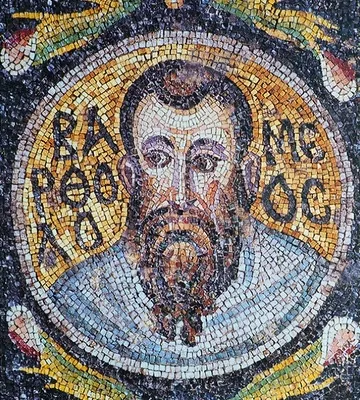
Translation of the Relics of the Holy Apostle Bartholomew (VI)
The translation of the relics of the holy Apostle Bartholomew. The Apostle Bartholomew suffered for Christ in the city of Alban (present-day Baku) in 71 and was buried there. Many miracles took place at his holy relics, and many of the godless were converted to the true faith. In the time of the Emperor Anastasius (491–518) the saint’s remains were translated to the city of Anastasiopolis.
When Anastasiopolis was taken by Chosroes, king of Persia, the Christians carried the relics of Saint Bartholomew towards the Black Sea coast, but the godless overtook them, and they were forced to give the coffin to the waves (according to another account, the magi themselves threw it into the water). Together with the remains of Bartholomew four more coffers were let down into the sea, with the relics of the holy Martyrs Papian, Lucian, Gregory and Acacius. By the power of God they did not sink, but floated miraculously and reached Italy. The coffin with the incorrupt relics of Bartholomew came to shore on the island of Lipari, while the other coffers continued on their way and stopped in various places in Italy. The arrival of the holy apostle’s remains was revealed in a miraculous vision to the local bishop, Agathon, who went out to the seashore with his clergy, brought the coffin out of the water and solemnly translated it to the church. Healing myrrh flowed from the apostle’s incorrupt relics. The holy thing remained in the church of Lipari until the middle of the ninth century; when the island was taken by pagans, Christian merchants took it to the city of Beneventum, where it was received with great honour and given a place in the main church of the city. According to some accounts, the holy remains of the Apostle Bartholomew (or some of his holy relics) were translated from there to Rome in the tenth century.



