
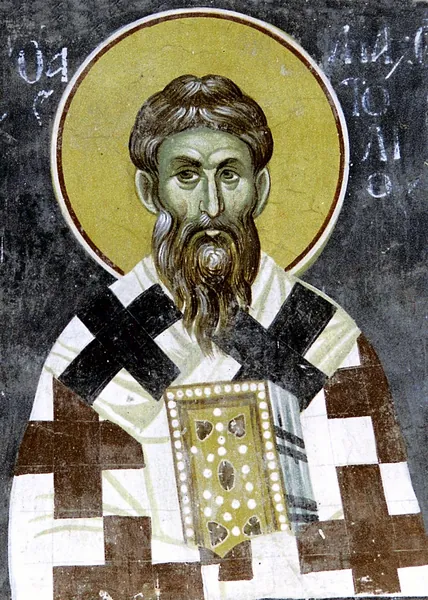
St Anatolius, Patriarch of Constantinople (+458)
Saint Anatolius, Patriarch of Constantinople, was born in Alexandria in the second half of the fourth century. He received a philosophical education, and then entered the service of Christ. At the Third Ecumenical Council, held in Ephesus in 431, the saint, in the rank of deacon, accompanied the Venerable Cyril of Alexandria (commemorated 18 January). The fathers of the council condemned the false teaching of Nestorius.
In 444 the archiepiscopal throne of Alexandria was occupied by the heretic Dioscorus. Dioscorus was a follower of the heresy of Eutyches, according to which, after Christ’s Incarnation, His divine nature entirely swallowed up the human. This false teaching shook the very foundation of the Church’s teaching on the redemption and ransoming of mankind. In 449 Dioscorus convened in Ephesus a heretical council which has gone down in history under the name of the “Robber Council”. This gathering of heretics, supported by the emperor himself, deposed and stripped of his rank the faithful defender of Orthodoxy, the Patriarch of Constantinople Flavian.
Saint Anatolius occupied the widowed see and boldly took up the struggle to defend the purity of the Orthodox teaching. As early as 450, at a local council in Constantinople, the blessed hierarch condemned the heretical teachings of Eutyches and Dioscorus. The confessor patriarch Flavian, who had died in exile, was numbered among the saints, and his remains were translated to the capital.
The following year, 451, the Fourth Ecumenical Council met in the city of Chalcedon with the participation of the Patriarch Anatolius, and laid down an exhaustive definition of faith on the Christological dogma.



