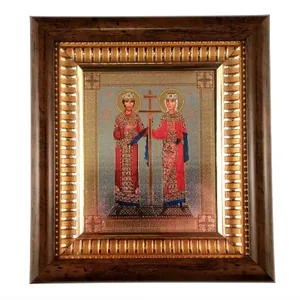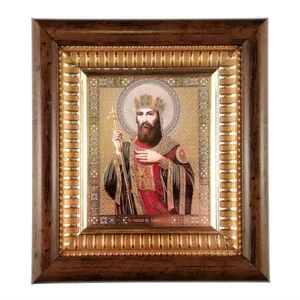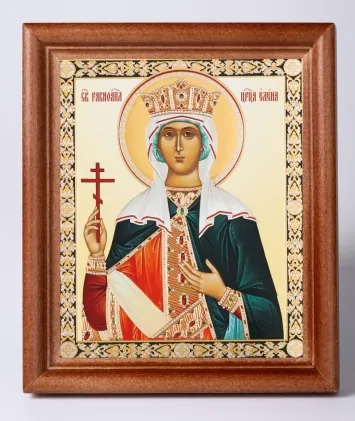
Holy Great Sovereigns Constantine (+337) and Helen (+327), Equal to the Apostles
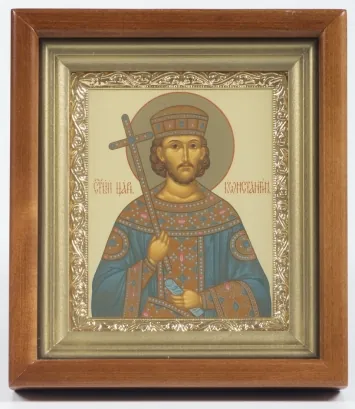
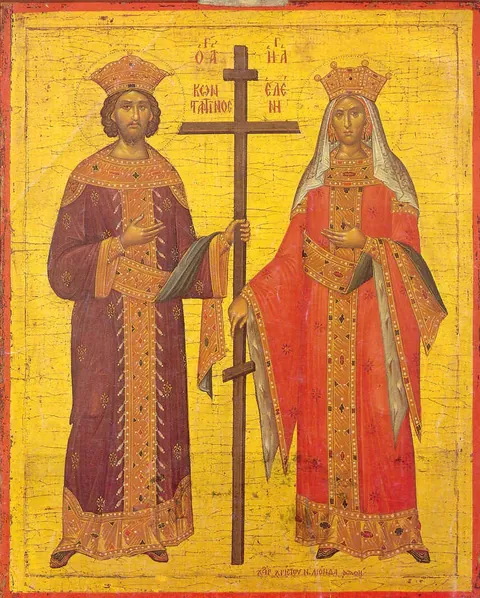
The holy great sovereigns Constantine (+337) and Helen (+327), Equal to the Apostles. Constantine, son of the Caesar Constantius Chlorus (305–306), received from the Church the title Equal to the Apostles, and in world history he is called Constantine the Great. At that time the Roman Empire was divided into two parts, western and eastern. At their head stood two independent emperors, who also had co-rulers. One such co-ruler of the Western emperor was the father of the Emperor Constantine. The saint’s mother, Saint Helen, was a Christian. The future Roman emperor Constantine grew up with respect for the Christian faith. Constantius Chlorus did not persecute the Christians at a time when other rulers of his day, Diocletian, Maximian Galerius and Maximian Herculius, were dealing most cruelly with the followers of the Saviour’s teaching. After his father’s death Constantine was chosen emperor of Gaul and Britain. First of all the new emperor granted the Christians freedom of confession. The fanatical pagan Maximian Galerius and the cruel tyrant Maxentius came to hate the emperor and rose against him, but with God’s help Saint Constantine defeated his adversaries. The saint besought the Lord to give from heaven a sign that would encourage his supporters before the battle. And indeed a shining cross appeared in the sky with the inscription: “By this conquer.” Having become sole ruler of the western part of the Roman Empire, in 313 the emperor issued in Milan an edict on religious toleration, and in 323, when he became emperor of the whole Roman Empire, he extended the Edict of Milan to the whole empire. After three hundred years of persecution the Christians were given the possibility of confessing their faith freely.
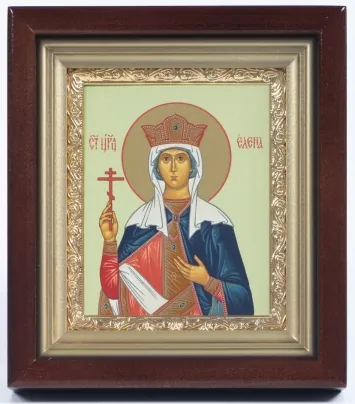
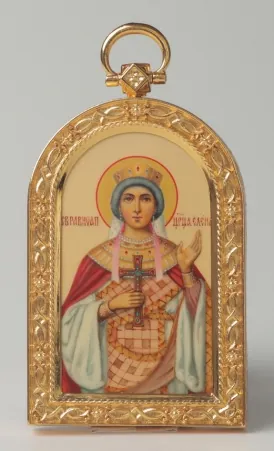
Having turned away from the pagans, Saint Constantine moved the capital of the empire to Byzantium, which was later called Constantinople. Saint Constantine was deeply convinced that only the Christian faith could unite the vast empire; he helped the Church in every way, built churches, and cared for the clergy. The emperor wished to find the life-giving Cross on which our Lord Jesus Christ was crucified. He sent his mother, the holy Empress Helen, to Jerusalem with clergy and helpers. Together with Macarius, Patriarch of Jerusalem, Saint Helen set about searching for the Cross and, by God’s providence, miraculously found it in 326. While in Palestine Saint Helen ordered the places of the earthly life of the Saviour and of the All-holy Virgin to be cleared and churches to be built. Over the Saviour’s tomb, by order of Saint Constantine, a splendid church of the Resurrection of the Lord was built. Saint Helen gave the life-giving Cross to Patriarch Macarius for safekeeping, and took a portion to the emperor in Constantinople. The empress returned to the capital and died in 327.
For her very great services to the Church and for finding the life-giving Cross the holy Empress Helen was called Equal to the Apostles.
The peace of the Christian Church was disturbed by heresy that arose within the Church. Already at the beginning of the emperor’s reign the heresy of the Donatists and Novatians arose in the West, which demanded that Christians who had fallen away during the persecution be baptised again. This heresy, rejected by two local councils, was finally condemned by the council of Milan in 316. The life of the Church was especially shaken by the heresy of Arius, which denied the divine nature of Jesus Christ. By order of the emperor the First Ecumenical Council was held in the city of Nicaea in 325. It was attended by 318 bishops. Among them were confessors, luminaries of the Church, who had endured the cruellest persecution. The emperor himself was also present at the council. The heresy of Arius was condemned and a Symbol of Faith was drawn up, into which the term “consubstantial with the Father” was included.
After the Council of Nicaea Constantine, Equal to the Apostles, continued his labours for the good of the Church. At the end of his life the emperor was baptised. He died on the day of Pentecost in 337, and is buried in the church of the Holy Apostles.