
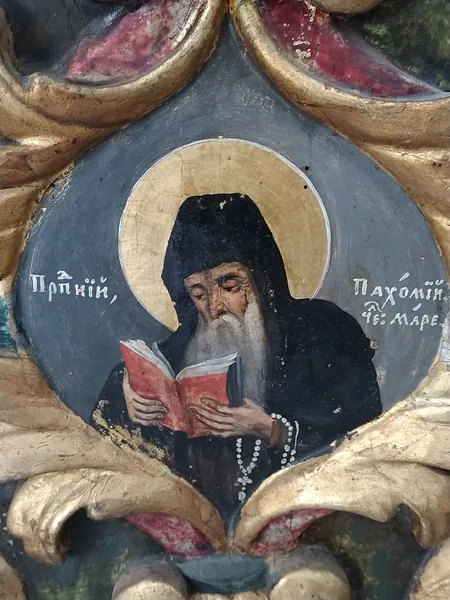
Venerable Pachomius the Great (348)
The Venerable Pachomius the Great (+348), together with Antony the Great (commemorated 17 January), Macarius the Great (commemorated 19 January) and Euthymius the Great (commemorated 20 January), is counted among the founders of desert-dwelling and of monastic life in Egypt. The Venerable Pachomius was born in the third century in the Thebaid (Upper Egypt) into a family of pagan parents, and received a good secular education. Saint Pachomius was distinguished by a good character, intelligence and purity. When he turned twenty he was called up for military service. The recruits were kept for a time in the city prison. The local Christians looked after them, brought them food and served them. When the young man learned that these people came to the prison out of faithfulness to the commandments of their God and love for their neighbour, he promised that he too would become a Christian. Returning from battle after the victory, Pachomius was baptised, settled in the village of Shenesit and began a strict ascetic life. He turned for guidance to the Theban desert-dweller Palamon, who received the young ascetic with love.
After ten years of life in the desert the Venerable Pachomius heard a heavenly voice by the ruins of the village of Tabennisi, commanding him to build a monastery on that spot. Pachomius told the Venerable Palamon of this. Both fathers went to Tabennisi and began to build a monastery. Saint Palamon blessed the foundation of the monastery and foretold its future glory. After Palamon’s death an angel of the Lord appeared to Saint Pachomius in the form of a schemamonk and gave him the rule of monastic life. Soon his elder brother John came to the venerable father and settled with him.
Little by little disciples gathered round the Venerable Pachomius. The abbot of the monastery governed the brotherhood well and wisely guided the spiritual life of the monks. The Venerable Pachomius introduced the rule of common life and laid down the same food and clothing for all. The monks of the monastery had to do their work according to the obediences assigned to them. Among the obediences was the copying of books. The monks were to have no money of their own, nor to receive it from relatives. The venerable father held that obedience was a virtue higher than fasting and prayer, and demanded strict keeping of the rules from the monks.
Once his sister Mary came to the Venerable Pachomius. The strict ascetic did not break the common rule. But through the doorkeeper he gave Mary his blessing to become a nun. The monks of Tabennisi built a dwelling for women on the other bank of the Nile. Nuns began to gather round Mary, and soon a convent was founded, which followed the rule laid down by the Venerable Pachomius.
The number of monks grew so much that seven monasteries had to be built. The number of the fathers reached seven thousand. The Venerable Pachomius guided them all.
Strict and demanding towards himself, the Venerable Pachomius was wonderfully kind and indulgent towards novice monks.
The Venerable Pachomius treated sick monks with special love; he visited them, encouraged them, urged them to give thanks to the Lord and entrust themselves to His holy will, and lightened the fast for the infirm when this was needed for their recovery.
At the end of his life the Venerable Pachomius fell ill with the plague that had spread in that region. The holy father was nursed with a son’s love by his closest and most beloved disciple, the Venerable Theodore (commemorated 17 May).
Saint Pachomius died around 348, at the age of fifty-three. He was buried near the monastery, at the foot of the mountain.



