
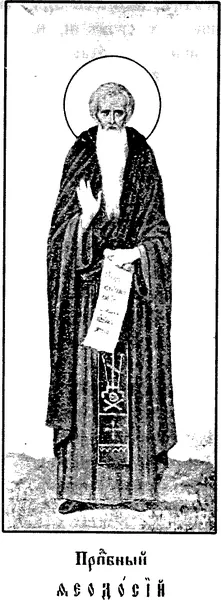
Our Venerable Father Theodosius the Great, Head of the Coenobites (+529)
Saint Theodosius the Great was born in 424 in Cappadocia, into a family of God-fearing Christians. His parents “taught him spiritual learning” and made him a reader in the church. “The love of God” had early fallen into Theodosius’s heart, and he thought of withdrawing from the affairs of this world. Strengthened by fervent prayer and encouraged by the counsels of the Gospel, he carried out his intention: he left his native city and hastened to Jerusalem to venerate the holy places. On his way back from the Holy City the young man passed through Antioch and received a blessing from Symeon the Stylite. The holy father, gifted with clairvoyance, called down from his pillar to God’s chosen one: “Welcome, man of God, Theodosius”; then he called him up to him, kissed him, and foretold that he would be a shepherd of rational sheep. Full of divine love, Theodosius spent some time in obedience to a hermit elder famous for his holiness, then lived in the Cathisma monastery, and at last, wishing for solitude, shut himself up in that cave of the Palestinian desert where, according to tradition, the Magi had spent the night on their way back from Bethlehem after worshipping Jesus. For thirty years the holy father lived in this cave and tried by fervent toil and fasting to subdue the desires of the flesh: he ate only on Sundays, and stood in prayer day and night with weeping and mourning.
“A city that is set on a hill cannot be hid”: the report of Theodosius’s virtuous life spread too, and those wishing for spiritual instruction came to him in an unbroken stream. The saint allowed some of them to stay with him. Theodosius “wished to build a tomb, that the brethren might look upon it and remember death all their days, and profit thereby”.
The number of brothers gathered round Theodosius gradually grew, and it became necessary to build dwellings for them. “And the saint fell between two thoughts”: out of love for stillness he shunned disturbance, yet he also wished to build “for the life of those who came to him”. He besought God to reveal His will. He put charcoal in a censer, laid incense on it, held it in his hand, and so went round all the places being considered for a monastery. “And as he saw nothing”, he turned back. When he drew near his cave, the charcoal suddenly caught fire and a pleasant smell of incense spread all around. So God’s will was revealed. Here the saint built the first common dwelling, or lavra, which was governed by the typikon of Basil the Great. In Theodosius’s monastery strangers, the poor and “all who fled unto him” were received and comforted with joy; but once, during a famine, a great crowd of starving people gathered, and “the servants were afraid lest the bread should not suffice for that multitude of people”. The hegumen, trusting in God, ordered the doors to be opened. The starving people were seated round the tables. “They did all eat, and were filled, and departed, and glorified God”, while the monastery granary lacked nothing.
The holy father cared for the sick as well. He built a shelter for the infirm. Many of the saint’s disciples also laboured outside the desert: some took on the labour of hermits, and some were appointed bishops and hegumens of various monasteries.
“And who could tell all the many-coloured virtues the saint wrought, and his surpassing prayer and reading of books day and night?” Every week, from Saturday Vespers until dawn, he kept the brothers in vigil, and after prayer instructed them with sayings of the apostles and the fathers of the Church.
In the reign of the Emperor Anastasius (491–518) the heresy of Eutyches and Severus spread in the empire; its followers were called “the Headless” (in Greek Acephaloi) because they rejected the divine Mysteries and the grace of the priesthood. Anastasius sided with the heretics and began a cruel persecution of the Christians. Theodosius rose to defend Orthodoxy: he gathered the superiors of all the monasteries and with them wrote a letter to the king, in which he condemned all the heresies anathematised at the Ecumenical Councils and declared that the monks “will not consent to receive Severus, nor any other of the heretics, until the blood of all be shed”. The emperor calmed down for a short while, but then renewed the persecution. Then the holy father, moved by divine zeal, went to Jerusalem and anathematised the heresy from the ambo of the great church.
God granted Saint Theodosius the gift of foresight, and through his prayer many miracles took place: the wheat in the granary multiplied, in time of drought rain came down from heaven, childless mothers were given children, people were healed of illnesses and came unharmed out of trials.
The venerable father foresaw the day of his repose. At the age of 105, weighed down “with sickness together with great old age”, three days before his death the saint sent three prosphoras each as a blessing to all the superiors of the desert, and three days later summoned them all to him. When the fathers had gathered, Saint Theodosius greeted them, blessed them, and then lifted up his hands, prayed, and with the words “Into Thy hands, O Lord, I commend my spirit” reposed. This happened in 529. The saint was buried with honour in the cave where he had begun his labours.



