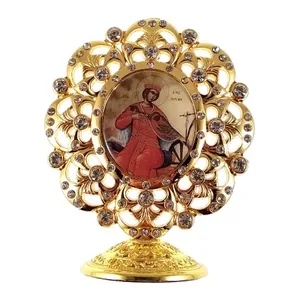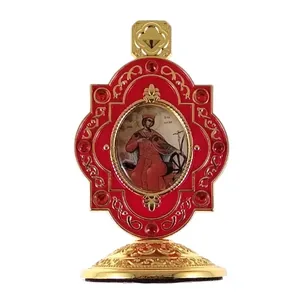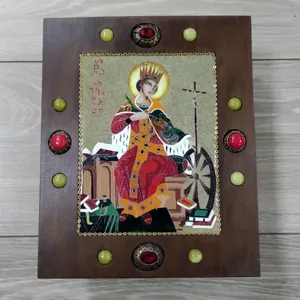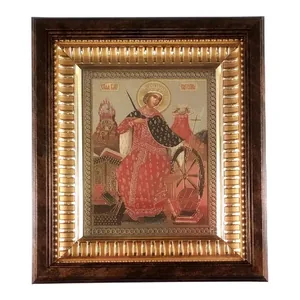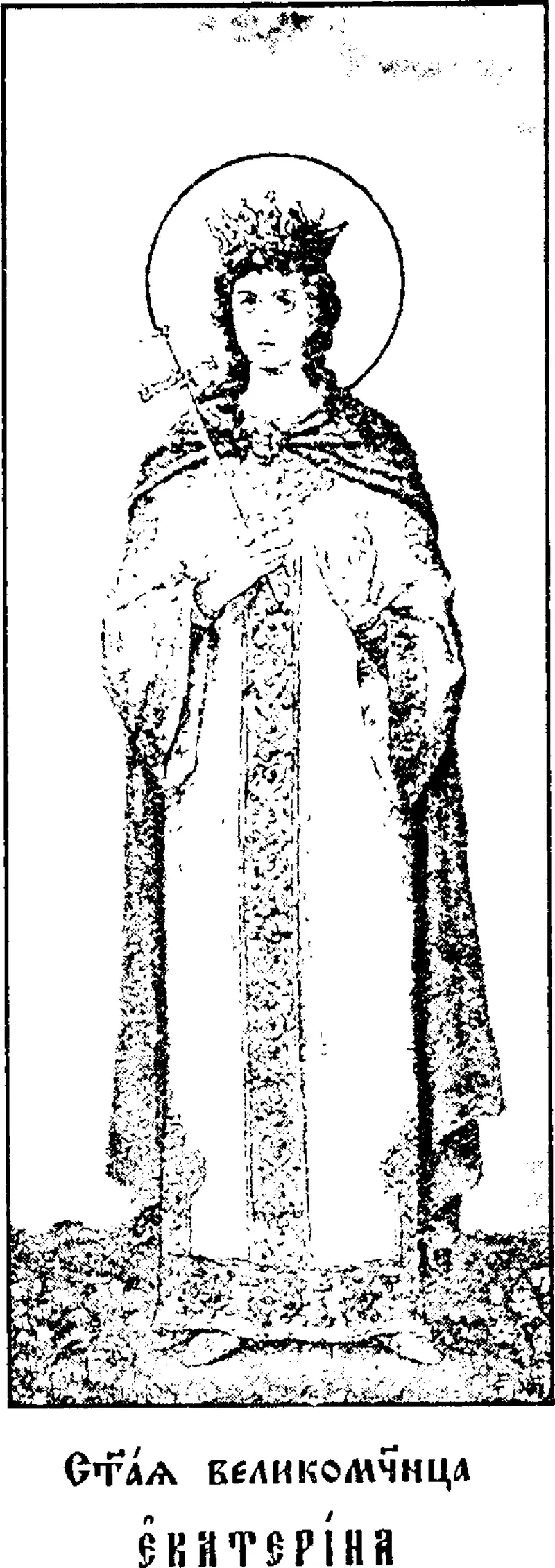
Great Martyr Catherine (+305–313); Holy Martyr Augusta; Holy Martyr Porphyrius the Stratelates and 200 Soldiers (+305–313)
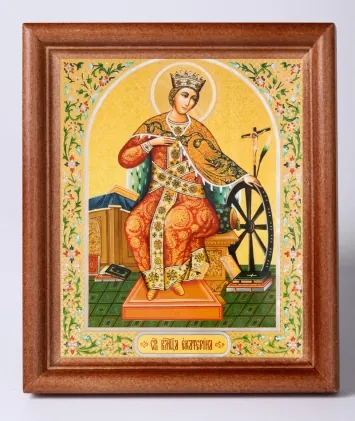
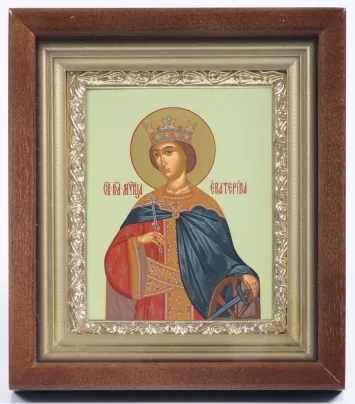
The Great Martyr Catherine was the daughter of Constus, the governor of Alexandria in Egypt. Adorned with intelligence, the maiden received a brilliant education. Young men from the noblest families of the empire sought her hand, but Catherine’s heart could not love any of them. The saint declared to her parents that she would marry only one who surpassed her in nobility of birth, wealth, beauty and wisdom.
Catherine’s mother, a secret Christian, took her daughter for counsel to her spiritual father, a holy teacher who laboured in a secluded cave near the city. When the blessed elder had listened to the maiden, he said to her: “I know a Youth who surpasses you in everything: His beauty is brighter than the sun, His wisdom governs all that exists, His wealth is poured out upon the whole world yet is not diminished in the least, but on the contrary is multiplied; and His lineage is beyond words.” On parting the teacher gave Catherine an icon on which the Most Holy Mary was depicted holding the infant Saviour in her arms.
Catherine prayed fervently all night. At last her supplication, offered with a sincere heart, was heard: in a divine vision the Most Holy Virgin appeared before the saint and asked her divine Son to look upon the maiden kneeling before them, but the Child turned His face away from the girl. Terribly grieved, Catherine turned again to the teacher. The elder received her with love, instructed her in the Christian faith and performed the rite of baptism. Then the Theotokos with the Child Jesus again appeared to Saint Catherine in a vision in her sleep. This time the Lord gave the holy maiden a ring. When Catherine woke up, the Saviour’s wonderful gift, a golden ring, was shining on her hand.
At that time the Emperor Maximinus (305–313) himself came to Alexandria for a pagan festival. The city was full of crowds thronging the squares. Human beings were offered in sacrifice too: confessors of Christ, whom even cruel torments could not turn away from the saving faith, were mercilessly thrown into the fire. Moved by holy love for the martyrs of Christ and an irrepressible desire to ease their lot, Catherine addressed the chief priests of the empire and the godless Emperor Maximinus himself. The blessed one declared who she was, openly confessed her faith, and wisely exposed the error of the pagans. The maiden’s beauty captivated the king. The emperor summoned fifty of the most learned wise men of the empire, but Catherine overcame them in debate and converted them all to Christianity. The blessed maiden made the sign of the cross over the confessors, after which they courageously accepted death for Christ: by the emperor’s order the martyrs were burned in the fire.
The emperor handed the blessed one over to torture, and then shut her up in prison. The Empress Augusta, who had heard much about Saint Catherine, wished to see her. The empress was amazed at the steadfastness of spirit of the saint, whose face shone with divine grace. Saint Catherine explained the Christian teaching to those who had come, and they too believed in the true God.
The next day the martyr was again brought before the tribunal; they threatened her with torture on the wheel and once more demanded that she deny Christ and offer sacrifice to the false gods. The Lord’s chosen one again courageously confessed the Saviour. She went up to the wheels herself, but an angel shattered the instruments of torture, and the flying fragments killed many pagans. When they saw this miracle, the Empress Augusta and the commander Porphyrius with two hundred soldiers openly confessed the faith of Christ, for which they were all put to death. Maximinus tried again to seduce the maiden, and this time offered her marriage, but received a refusal in answer. The blessed Catherine firmly declared that she remained faithful to her heavenly Bridegroom, Christ, offered up a prayer to Him, and herself laid her head on the executioner’s block. The lawless ones beheaded the martyr. The holy relics of the blessed Catherine were carried by angels to Mount Sinai. In the sixth century, by a heavenly revelation, the precious head and left hand of the God-pleaser were found and translated with honour to the church of the Sinai monastery built by the Emperor Justinian (527–565; commemorated 14 November).