
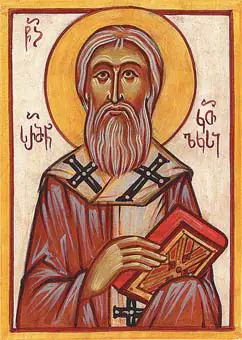
Our Father among the Saints Sarmean, Catholicos (+779)
The holy Catholicos Sarmean governed the Church of Georgia from 767 to 779. His patriarchate coincided with Arab rule in Georgia. The Arabs cruelly persecuted the Christians, oppressed the servants of God and tried everywhere to establish Islam; yet despite this, during Catholicos Sarmean’s patriarchate many churches were open even in Tbilisi, the very city where the emir ruled. Sarmean was a firm defender of Orthodoxy, but once, on the Thursday of Cheesefare Week, in the monastery of Shiomghvime, Sarmean gave Communion “without enquiry” to strangers who had come to him with gifts, and who, it turned out, were followers of the Jacobite heresy. “That same night in his sleep it was revealed to Sarmean from on high that his rank had been so heedlessly and unworthily dishonoured”; on waking, the catholicos gathered the bishops, told them what had happened, burned before them the gifts the Jacobites had brought, and “wept with tears over his error”. The all-merciful God soon made known to Saint Sarmean the forgiveness of this sin, and a letter came from the bishops at Mtskheta: “To the great patriarch, our master Sarmean, rejoice! Thy sons and all the bishops faithful to thy holiness make known to thee that thou shouldst no longer wear out thy aged body, for [God] has had mercy through the intercession of that glorious and holy Shio, who appeared to us his unworthy servants, five in number, and said to each of us: ‘God has forgiven Catholicos Sarmean his faults, and now receive your shepherd without doubting.’ Now let thy holiness bid us all come there and give thanks to the wonderworking father Shio.”
The hierarch, adorned with such fear of God, humility, faith and love, governed his flock wisely: churches and monasteries were built, most precious literature of a spiritual character was written, and by guarding the purity of the Church’s teaching and by release from the captivity of sins, concrete measures were gradually being prepared for liberation from bodily captivity.
In the chronologies of the catholicoi of Kartli his tenure as catholicos runs from 767 (according to some conjectures from 760) to 774.



