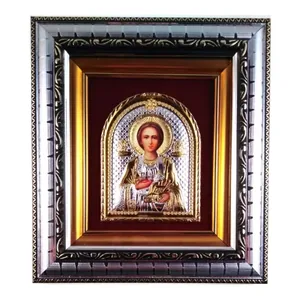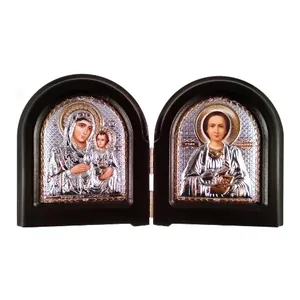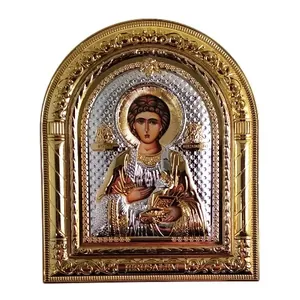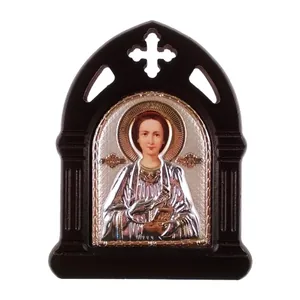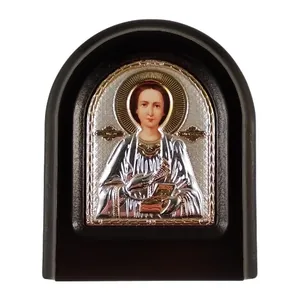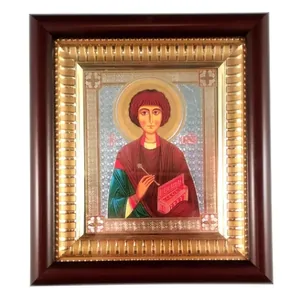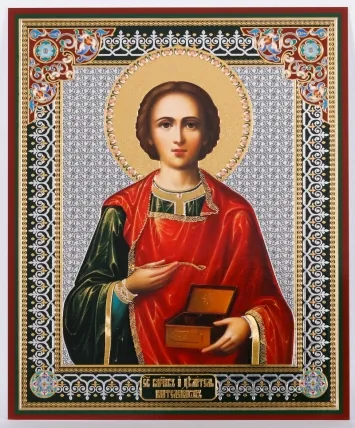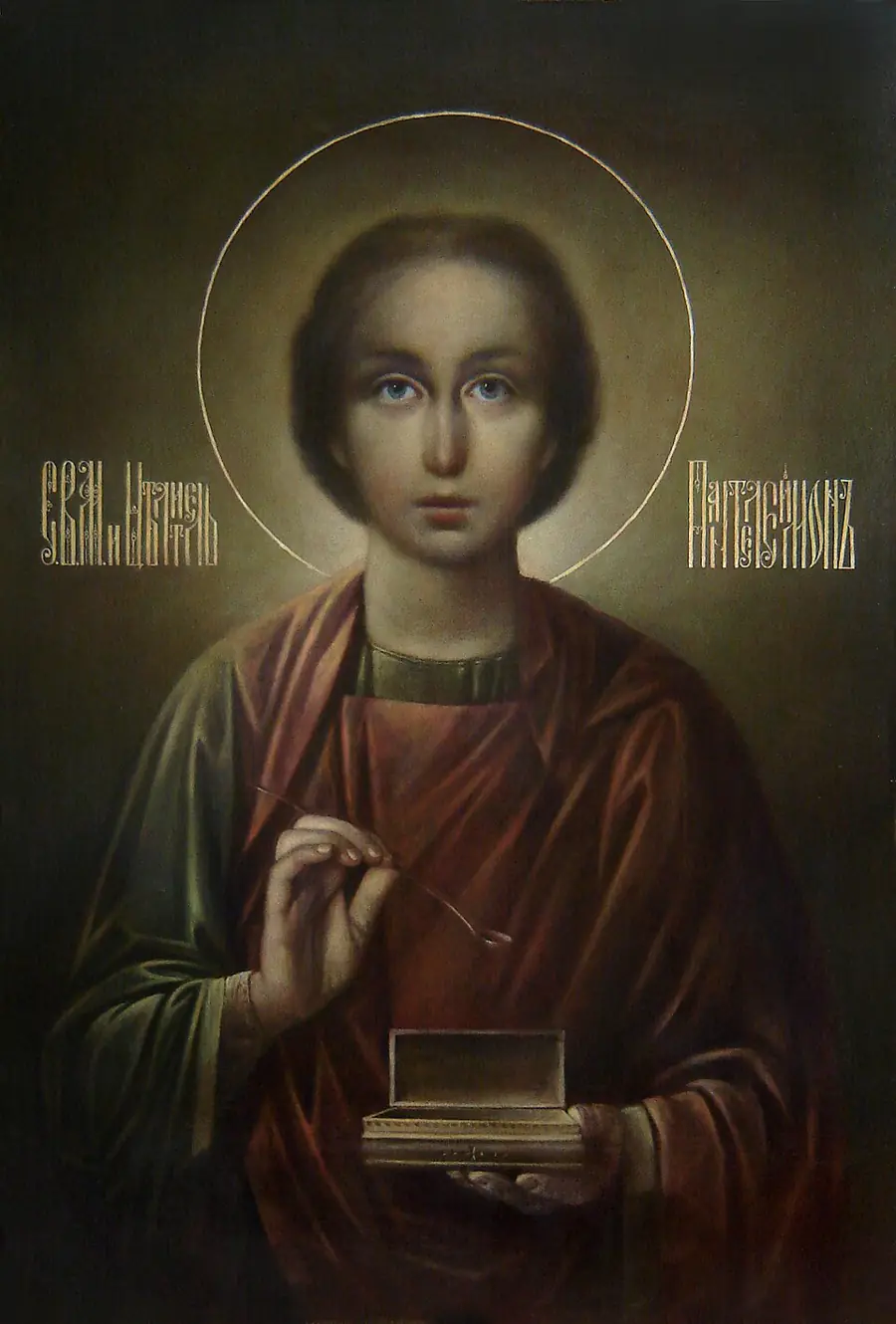
Great Martyr and Healer Panteleimon (+305)
The Great Martyr and Healer Panteleimon was born in the city of Nicomedia, into the family of Eustorgius, a noble and influential pagan, “a table companion of the king”, and Eubula, a pious Christian woman. The newborn was named Pantoleon, “a lion in all things”. His mother, who brought her son up in hope in the true God, died early, while his father instilled in the boy loyalty to the pagan faith, “instructed him in wisdom and learning”, and then, to master the art of healing, entrusted him to Euphrosynus, the chief of the physicians, who “healed the king and all the people of his palace”.
The young man, distinguished by understanding, kindness and beauty, was always taken by his teacher to the palace. Here the Emperor Maximian (284–305; 307–310) noticed him, was charmed, and ordered Euphrosynus to instruct the blessed one quickly, for he had decided to make him his personal physician. On his way to his teacher Pantoleon had to pass in front of a small house in which the holy presbyters Hermolaus, Hermippus and Hermocrates (commemorated 26 July) lived. Hermolaus sensed in spirit that this young man would become a chosen vessel of God. One day he invited him into his house and talked with him. When he learned that he was diligently mastering pagan teachings, the venerable father said to him: “My child, Asclepius and Hippocrates and Galen were nothing, for they served vanity; and the gods whom thy king serveth are nothing,” and then he preached the true faith to him. The good seed fell on good ground: Pantoleon believed in the true God. From then on he went every day to the presbyter Hermolaus and drank in the teaching of the Gospel.
One day, on his way home, Pantoleon came upon a dead child who had been bitten by a viper, and the viper itself lay there beside him. At first the young man was dismayed, “was amazed and drew back a little”, but then he decided to make sure of the truth of Hermolaus’s words; he raised his eyes to heaven and said: “O Lord Jesus Christ, if it be pleasing to Thee that I be Thy servant and worthy of Thy calling, raise now this child in Thy name!” At these words the child stood up as if waking from sleep, while the serpent burst and died. “Then Pantoleon received the grace of faith”; he gave thanks to God, hastened at once to Hermolaus, fell on his knees before him and asked to be baptised. The holy presbyter baptised the blessed one.
After this Pantoleon, by grace-filled words and clever questions, shook his father’s belief in the pagan gods. And after he opened the eyes of a blind man, by calling on the Saviour’s name, whom even the most skilful physicians of the city had been unable to help, Eustorgius smashed the statues of the false gods with his own hands, confessed the true God and was baptised.
After his father’s death the saint set his slaves free and distributed the property he inherited to the poor. He went round the prisons comforting the prisoners, served the sick “with his own hands”, healed them in the name of Christ, and helped them materially too. The inhabitants of the city left the other physicians and hastened to Pantoleon. And he, by the grace of God, worked many miracles. “The other physicians envied that work of his” and sought a pretext to destroy the blessed one. At last, filled with spite, they told Maximian that his chosen one “healeth… those who revile the gods, and giveth them food, and is fallen away from the service of the gods”, and that if he did not destroy him in time, he would turn many more away from the law of their forefathers. The king had Pantoleon brought and demanded that he refute the accusation, but the saint boldly confessed his faith and, before the autocrat’s eyes, healed a paralysed man by calling on the name of Christ. The enraged Maximian ordered the Lord’s chosen one to offer sacrifice to the idols, but neither threats nor flattery could bend the blessed one. Then they tortured him terribly: they hung him on a tree, “scraped” and “tore” his flesh with iron claws, burned his body with lighted torches, threw him into boiling lead, cast him into the sea with a stone tied to his neck, threw him to the beasts to be torn apart, bound him to a great cart-wheel and sent it hurtling down from a height to cut him to pieces; but the martyr, encouraged by the Lord’s appearance, came out of the torments completely unharmed by the Lord’s own power. After this the saint’s teacher, Hermolaus, and with him the presbyters Hermippus and Hermocrates were brought before the tribunal and put to death for confessing the truth (see the reading for 26 July), while they said to Pantoleon: “Behold, thy teachers have confessed the power of the gods”; they have offered sacrifice to them and are now in the palace with honour. The martyr of Christ answered: I know well that “those saints dwell in heaven, in the city of Christ.”
Beside himself, Maximian again “tormented him with many torments”, and then ordered his servants to put him to death and burn him in fire. The executioners led the blessed one out of the city, brought him “to the place where it pleased the Lord that the saint should end his life”, and set him under the olive trees. One soldier thrust his sword at the God-pleaser, but the sharp weapon bent like wax, and the saint “was nothing harmed”. Shaken by the miracle, the soldiers believed in Christ and asked the martyr to beg the Lord for the forgiveness of their sins. In answer to his prayer a heavenly voice called the blessed one to the Kingdom and told him: “Henceforth thy name shall no more be called Pantoleon, but Panteleimon shall be thy name, which is, All-merciful; for thou hast been merciful to all men, and thou shalt be a quiet haven for those who flee to thee, a helper of the afflicted, a stay of the despairing, and a driver-out of evil spirits.”
The executioners refused to carry out the sentence, but the martyr of Christ answered them: “If ye do not this, ye have no part with me.” Then the soldiers reverently kissed the blessed one, “and so they cut off his head”. The saint’s body became white as snow, milk flowed from his wounds instead of blood, and the olive trees were laden with fruit. Many who witnessed this miracle glorified the true God. The Christians committed him to the earth with honour (+305). Present at the execution of the Lord’s chosen one were his servants Laurence, Bassus and Probian. It is they who preserved for us the accounts of Panteleimon’s life and martyrdom.
The great martyr’s incorrupt relics are scattered throughout the whole Christian world. His precious head is kept on Athos, in the Russian monastery dedicated to Saint Panteleimon.