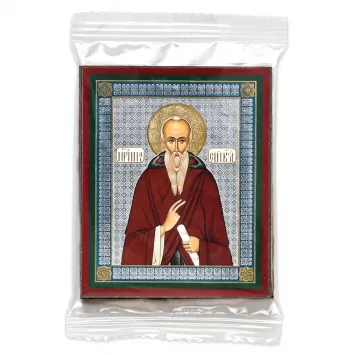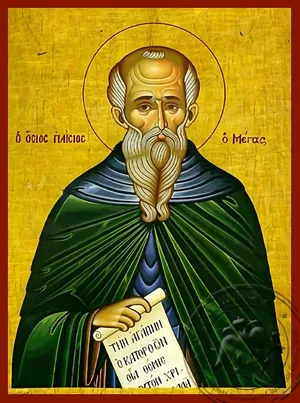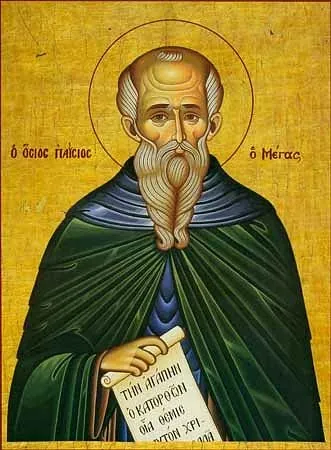
Venerable Paisius the Great (V)
The Venerable Paisius the Great was born in Egypt into a family of rich and pious Christians. The saint’s father died early, and his mother, at the prompting of an angel, gave her youngest son, Paisius, to servants of God to be brought up. Paisius came to love the monastic life while still a child, and when he grew up he went to one of the sketes of Egypt. Here the blessed one entirely cut off his own will and obeyed his teacher, Saint Pambo (commemorated 18 July), in everything. The ascetic diligently read Holy Scripture, prayed unceasingly and fasted strictly: at first he took food once a week, then once in two weeks, and sometimes, after receiving Holy Communion, he remained without food or drink for all of seventy days. Paisius lived in this monastery until the death of Saint Pambo, and then, by God’s will, went into the depths of the Nitrian desert and shut himself up in a cave he had hewn out with his own hands. Here the blessed father was made worthy of a wonderful vision: the Lord Jesus Christ Himself declared to him that through his labours the whole desert would be covered with the dwellings of spiritual strugglers. Paisius made bold to ask how they would be able to survive in this lifeless place. The Lord answered: “If they keep My commandments, I Myself will provide them with all they need and will turn aside from them the snares of the evil one’s temptations!”
Gradually those who wished to labour under his guidance gathered around the holy father, and monasteries were founded. The holy father’s soul grew heavy at the breaking of his vow of silence, and he moved to a more distant cave.
For his tireless labours the saint was granted the gift of healing spiritual ailments. Once a monk who had gone to Egypt with his blessing to sell his handiwork was joined on the road by a Jew. He kept urging the simple-hearted monk that Christ the Saviour was not the Messiah and that we must wait for another, the true Saviour. At last the monk said doubtfully: “Perhaps what thou sayest is true,” but he did not attach much importance to his words. When the monk returned to the monastery, Saint Paisius said to him with sorrow: “My disciple was a Christian, but thou art no longer a Christian: the grace of baptism has departed from thee.” The monk fell into repentance and, weeping bitterly, asked forgiveness. Only then did the holy father stand in prayer and beg from the Lord the loosing of his spiritual son’s sin.
The Venerable Paisius was distinguished by wonderful humility. He tried as far as he could to hide his labours. When the brethren asked which virtue was the highest, the saint answered: “That which is done in secret and of which no one knows.”
The Venerable Paisius reposed in deep old age in the fifth century. The monks committed him to the earth with honour. Some time later Saint Isidore of Pelusium (commemorated 4 February) translated the blessed father’s incorrupt relics to his own monastery and laid them beside the remains of his spiritual friend, the Venerable Paul the Desert-dweller.